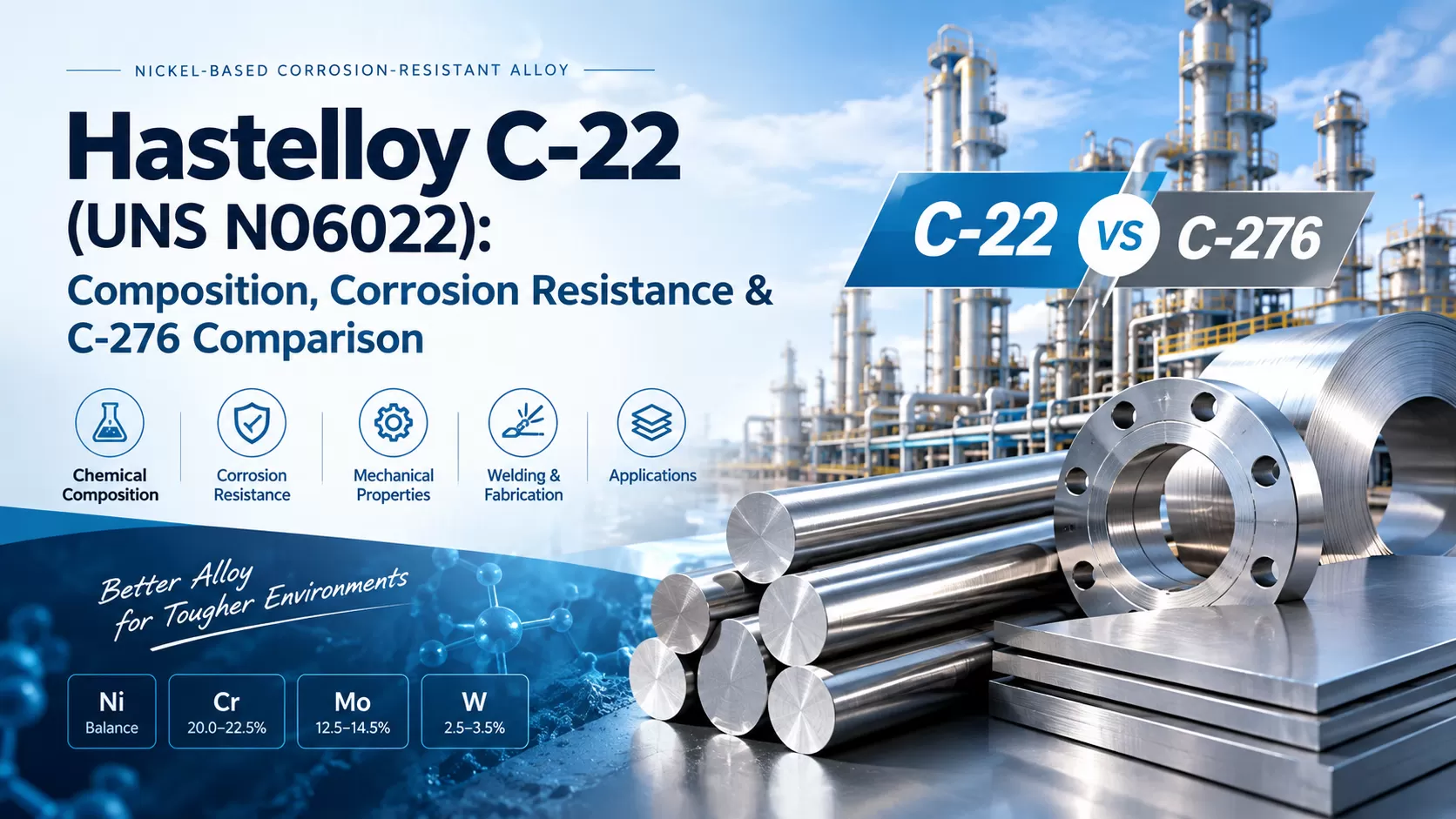
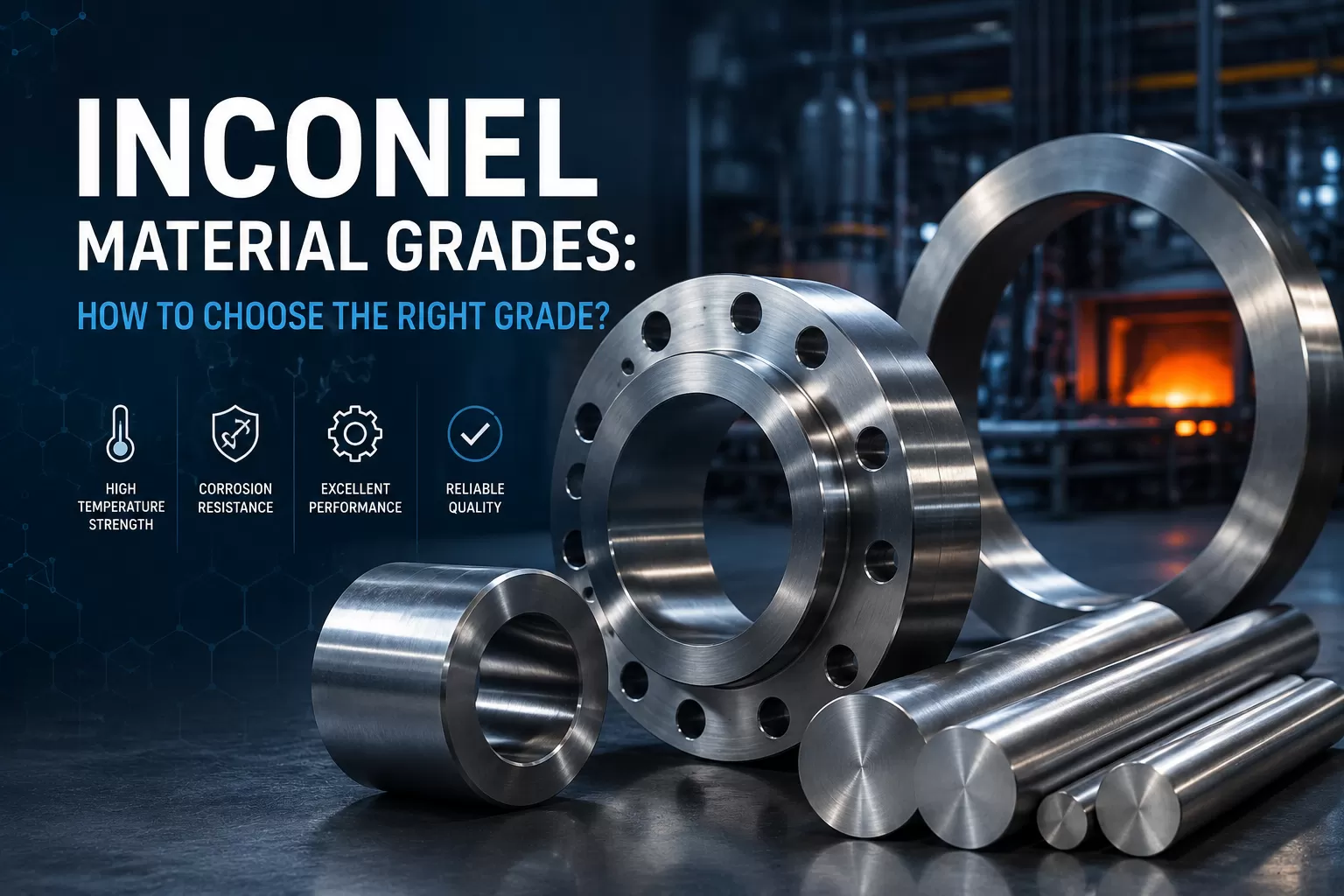
The global nickel alloy market is projected to reach USD 39 billion by 2032, with demand accelerating across aerospace, petrochemical, marine, and power generation sectors. Yet as the market expands, so do the risks. In 2025 alone, trade disputes caused by non-compliant material certifications rose by 15% quarter-over-quarter.
Whether you're an engineer specifying materials for a critical application or a procurement professional evaluating a nickel alloy supplier, understanding these five hidden traps is essential to protecting your project — and your budget.
This is the oldest and most persistent trap in specialty alloy procurement. Unscrupulous suppliers produce fake mill test certificates (MTCs) for substandard material — often using low-grade alloys or even recycled scrap passed off as premium nickel alloy grades.
A supplier offers a "great deal" on Inconel 625 or Hastelloy C-276. The price is 15–20% below market. They provide what appears to be a legitimate MTC with impressive chemical analysis results. But the actual material delivered has:
In one documented case, a supplier used N4 (Ni ≥ 99.9%) or even recycled pure nickel scrap to substitute N6 (Ni ≥ 99.6%) — a seemingly minor difference that resulted in completely different mechanical and corrosion performance.
Nickel alloys are specified under multiple, often conflicting, standards — ASTM (US), GB/T (China), DIN/EN (Europe), JIS (Japan). Unscrupulous suppliers exploit this complexity by cherry-picking the standard that works in their favor.
A supplier quotes Hastelloy C-276 "meeting ASTM B575." But when the material arrives, it fails GB/T 15007 inspection because the acceptable ranges for sulfur and phosphorus are narrower under the Chinese national standard.
The supplier defends themselves: "We met the quoted standard." The buyer is left with non-compliant material that cannot be used in their domestic project — and a costly legal battle to recover losses.
| Alloy | ASTM Standard | GB/T Standard (China) | Key Difference |
|---|---|---|---|
| Hastelloy C-276 | ASTM B575 | GB/T 15007 (NS334) | Tighter S & P limits in GB/T |
| Inconel 625 | ASTM B443 | GB/T 15007 (NS336) | Different trace element tolerances |
| Inconel 718 | ASTM B637 | GB/T 15007 (GH4169) | Heat treatment documentation requirements differ |
| Monel 400 | ASTM B127 | GB/T 15007 (NS411) | Differing acceptance criteria for Cu/Ni ratio |
Many nickel alloy grades require precise solution annealing followed by rapid cooling to achieve their specified corrosion resistance and mechanical properties. Cutting corners on heat treatment is a common — and dangerous — procurement trap.
For N08890 (Alloy 890), proper solution treatment requires heating to 1100–1180°C followed by rapid cooling (water quench or forced air). Without this, carbides precipitate along grain boundaries, creating a pathway for intergranular corrosion and dramatically reducing service life.
Similarly, Hastelloy C-276 is prone to hot cracking and sensitization if the cooling rate after solution annealing is insufficient.
Buyers often accept "hot-rolled" or "annealed" material thinking it's equivalent to fully solution-treated material. It is not. The material may pass room-temperature tensile tests but fail catastrophically under elevated-temperature service conditions.
In mission-critical applications — aerospace, nuclear, subsea oil & gas — full material traceability from melt to finished part is non-negotiable. Yet many suppliers cannot provide it.
Without traceability, you cannot confirm:
Some suppliers even practice "one certificate for multiple heats" — a dangerous shortcut that makes it impossible to trace quality issues back to their source.
This trap is particularly insidious because it preys on well-intentioned engineers who assume that "similar" nickel alloys are interchangeable. They are not.
| Requested Grade | Substitute Offered | Why It's Dangerous |
|---|---|---|
| N08890 (Alloy 890) | N08825 (Incoloy 825) | Different Cr/Mo/Cu ratios — corrosion resistance not equivalent |
| Inconel 718 | Inconel 625 | 625 is solid-solution strengthened; 718 is precipitation-hardened — completely different strength mechanisms |
| Hastelloy C-276 | Hastelloy C-22 | C-22 is optimized for oxidizing environments; C-276 for reducing environments — not interchangeable |
| N6 Pure Nickel | N4 Pure Nickel | Different purity levels — N6 has specific mechanical properties N4 may not meet |
Sometimes the substitute is cheaper. Sometimes the supplier simply doesn't stock the requested grade and hopes you won't notice. Either way, the result is the same: a material that does not meet your application requirements.
Based on extensive industry research, here is a practical checklist for evaluating any nickel alloy supplier or special metal supplier:
| Dimension | What to Check | Red Flags |
|---|---|---|
| Certification & Compliance | ISO 9001, ISO 14001; ASTM/ASME/NACE compliance | "We can get you any certificate you need" — certificate forgery risk |
| Stock & Delivery | Own warehouse; full规格 coverage; clear lead times | Broker-only operations with 1-3 month lead times for common grades |
| Quality Control | In-house spectrographic analysis; NDT capability; incoming/outgoing inspection | No independent testing; relies only on mill certificates |
| Technical Support | Application engineering; welding/fabrication advice; 24-hour response | No technical team; "just a trader" |
| Track Record | Verifiable case studies in your industry | Fabricated case studies; no verifiable references |
The difference between a reliable nickel alloy supplier and an unreliable one isn't measured in price per kilogram — it's measured in uptime, safety, and peace of mind.
A material that fails prematurely can cost 10–50 times its purchase price in: unplanned downtime, emergency replacement, liability claims, and reputational damage.
Conversely, investing time in proper supplier verification — checking certifications, demanding traceability, specifying heat treatment, and conducting independent testing — pays for itself many times over in reliable performance and extended service life.
When you're sourcing nickel alloy, hastelloy metal, or other speciality alloy products, remember: the cheapest quote is rarely the cheapest in the long run.



25th floor, C3 Building, Wanda Plaza, Kaifu District, Changsha, Hunan Province, China
 en
en
 ko
ko
 ru
ru
 es
es
 ar
ar
 hi
hi