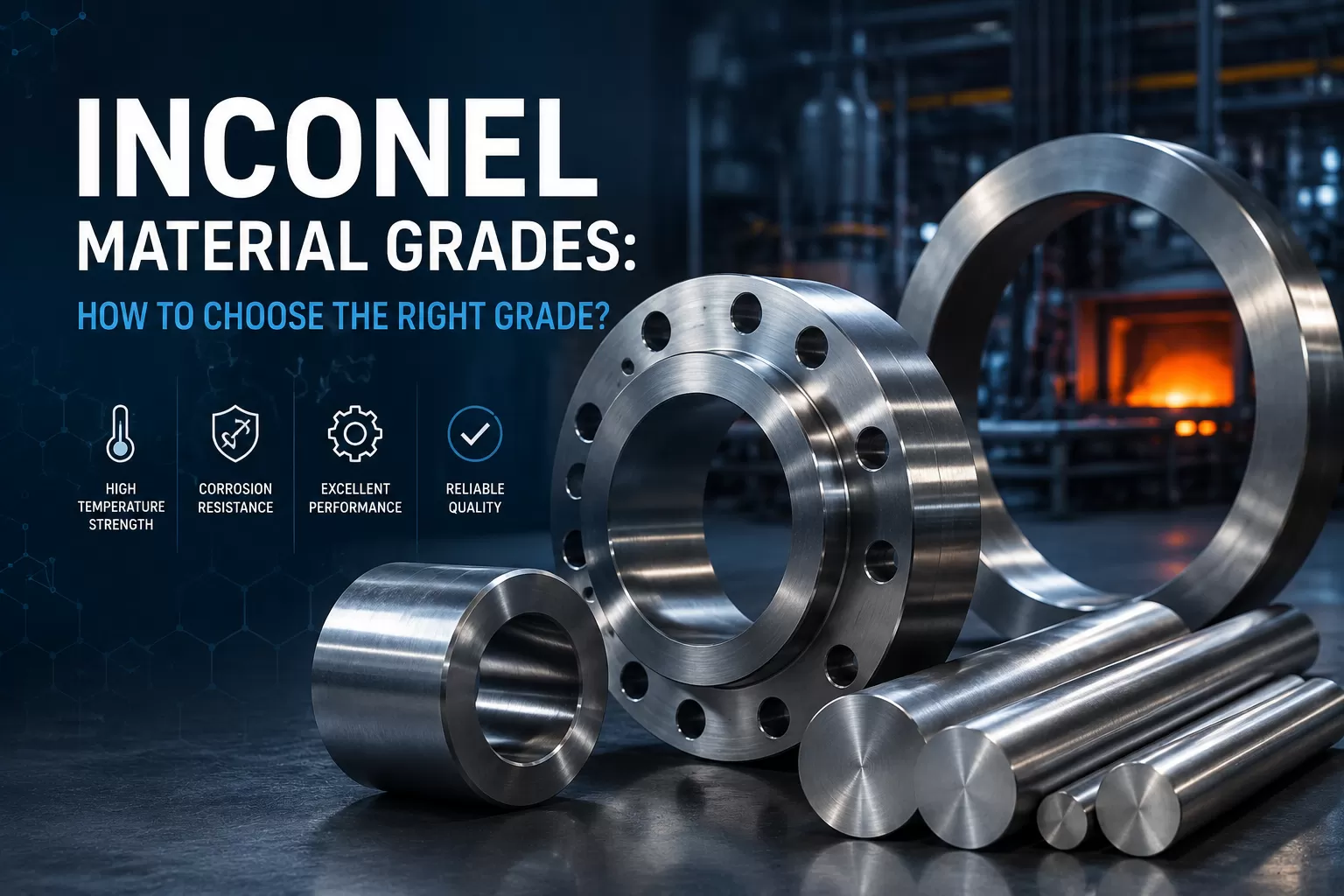
In extreme environments—aerospace, oil & gas, nuclear, chemical processing, and deep-sea engineering—standard steels often fall short. Engineers turn to nickel alloy and special metal grades that deliver unmatched high‑temperature strength, corrosion resistance, and fatigue performance.
Faced with a bewildering array of Inconel®, Hastelloy®, Monel®, and numerical suffixes like 625, 718, C‑22, C‑276, how do you choose the right one? This guide, based on technical insights from Alloy‑Ronsco, provides a complete framework for selecting hastelloy metal, high temp alloys, and other speciality alloy products.
Technical support provided by Alloy‑Ronsco – your trusted nickel alloy supplier and special metal supplier.
Faced with data sheets, engineers often agonise over 304 vs 316 stainless, Hastelloy C‑22 vs C‑276, Inconel 625 vs 718. These decisions carry huge cost and performance implications, yet the differences are frequently misunderstood.
Before consulting any data sheet, ask yourself three questions:
These three dimensions – corrosion, temperature, and mechanical needs – form the basis of any sound material selection.
| Alloy | Corrosion Environment | Max. Service Temp. | Primary Advantage |
|---|---|---|---|
| 304 Stainless | Indoor, general | ~870°C | Cost‑effective, versatile |
| 316 Stainless | Marine, chemical, chlorides | ~870°C | Mo adds pitting resistance |
| Hastelloy C‑22 | Oxidising environments, chlorides | ~700°C | 22% Cr gives stable passive film |
| Hastelloy C‑276 | Reducing acids, high temp | ~700°C+ | Higher Mo+W for reducing conditions |
| Inconel 625 | Seawater, acids, chlorides | ~982°C | Solid‑solution strengthened, excellent corrosion |
| Inconel 718 | High‑temperature oxidation | ~704°C | Precipitation‑hardened, ultra‑high strength |
The only real distinction that matters between 304 and 316 is corrosion resistance, and it comes down to one element – molybdenum (Mo).
Nickel alloy products are the backbone of modern high‑performance engineering – from jet engines and nuclear reactors to chemical plants and subsea equipment. The global market exceeded USD 17 billion in 2025.
Nickel alloys are generally classified by chemical composition:
| Alloy Type | Main Components | Representative Grades |
|---|---|---|
| Pure Nickel | Ni ≥ 99% | 200, 201 |
| Ni‑Cu | Nickel‑Copper | 400, K‑500 |
| Ni‑Mo | Nickel‑Molybdenum | B, B‑2, B‑3 |
| Ni‑Cr‑Fe | Nickel‑Chromium‑Iron | 600, 601, 800, 800H, 690 |
| Ni‑Cr‑Mo | Nickel‑Chromium‑Molybdenum | 625, C‑276, C‑22, C‑2000 |
| Ni‑Cr‑Fe‑Mo‑Cu | Nickel‑Chromium‑Iron‑Molybdenum‑Copper | 825, G, G‑3, G‑30 |
Note: Nickel alloys typically contain >50 wt% Ni; some high‑performance grades exceed 70 wt%.
Inconel is a trademark of Special Metals Corporation. These nickel‑chromium‑based high temp alloys are known for oxidation resistance and creep strength up to 1000°C, making them the first choice for aerospace, gas turbines, and high‑temperature process equipment.
| Grade | Key Characteristics | Typical Applications |
|---|---|---|
| Inconel 600 | Solid‑solution strengthened; oxidation and caustic corrosion resistance | Chemical process equipment, organic chloride reactors |
| Inconel 625 | Mo + Nb addition; exceptional pitting and fatigue resistance (–196°C to 980°C) | Bellows, marine engineering, cryogenic service |
| Inconel 718 | Precipitation‑hardened; outstanding strength at ~700°C | Aerospace, rocket components, gas turbines |
| Inconel X‑750 | Precipitation‑hardened; retains strength up to 980°C | High‑temperature springs, fasteners |
| Inconel 690 | High Cr (~30%); exceptional oxidation and corrosion resistance | Nuclear industry, hot concentrated sulphuric acid |
Hastelloy metal refers to a family of nickel‑base alloys with additions of chromium, molybdenum, and tungsten, delivering outstanding resistance to harsh chemical environments and high temperatures.
Monel alloys are primarily nickel‑copper materials with relatively low chromium content. This combination provides exceptional corrosion resistance in seawater and acidic environments.
The Incoloy series (Ni‑Fe‑Cr alloys) have higher iron content, offering a good trade‑off between cost and performance.
Although Inconel, Hastelloy, and Monel are often grouped under the broad category of nickel alloy, each family addresses entirely different engineering challenges.
| Property | Inconel® | Hastelloy® | Monel® |
|---|---|---|---|
| Main Composition | Nickel‑Chromium base | Nickel‑Chromium‑Molybdenum | Nickel‑Copper |
| Core Strength | High‑temp strength & oxidation resistance | Severe chemical corrosion resistance | Marine & alkaline environment durability |
| Max. Service Temp. | Up to ~700°C (grade‑dependent) | ~700°C+ | ~540°C |
| Typical Uses | Aero‑engines, gas turbines, nuclear steam generators | Chemical reactors, acid processing, flue‑gas scrubbers | Marine engineering, seawater systems |
Engineering perspective: In a turbine environment where heat and mechanical stress coincide, Inconel 718 is often chosen for its ability to resist creep while maintaining strength. In mixed‑acid environments where stainless steel fails by pitting, Hastelloy C‑276 typically delivers long service life with minimal maintenance.
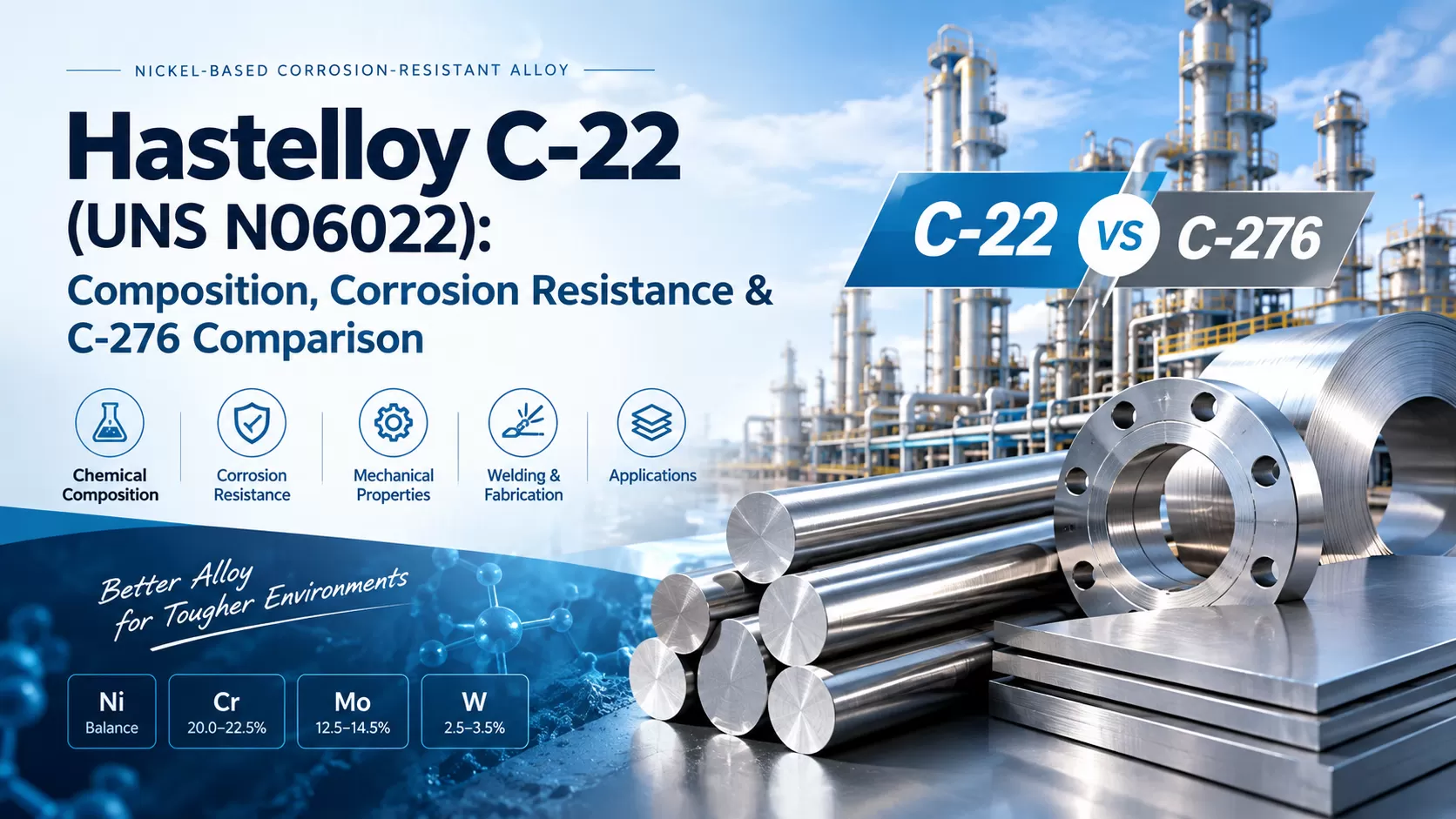
Hastelloy C‑22 and C‑276 are two of the most widely used hastelloy metal grades, but they target different corrosive environments.
In most mixed chemical environments, engineers tend to favour C‑22, while C‑276 remains the industry standard for reducing acids and high‑temperature chemical processing.
| Property | Hastelloy C‑22 | Hastelloy C‑276 |
|---|---|---|
| Chromium (Cr) | ~22% | ~16% |
| Molybdenum (Mo) | ~13% | ~16% |
| Tungsten (W) | ~3% | ~4% |
| Pitting Resistance (CPT) | Higher, gives greater safety margin in chlorides | Standard |
| Stress Corrosion Cracking Resistance | >50% longer life than C‑276 | Baseline |
| Post‑weld Corrosion Resistance | Remains excellent | May degrade |
| High‑temperature Stability (>700°C) | — | Superior |
Inconel 718 (UNS N07718, W.Nr. 2.4668) is a precipitation‑hardened high temp alloy widely used in industries that demand high strength, excellent corrosion resistance, and long‑term stability at elevated temperatures.
| Element | Content Range (%) |
|---|---|
| Nickel (Ni) | 50.0–55.0 |
| Chromium (Cr) | 17.0–21.0 |
| Iron (Fe) | Balance |
| Molybdenum (Mo) | 2.8–3.3 |
| Niobium (Nb) | 4.75–5.5 |
| Titanium (Ti) | 0.65–1.15 |
| Aluminium (Al) | 0.2–0.8 |
The alloy is strengthened by γ′ (Ni₃(Al,Ti)) and γ″ (Ni₃Nb) precipitates formed during ageing.
| Test Temperature | Tensile Strength (MPa) | Yield Strength (MPa) | Elongation (%) |
|---|---|---|---|
| Room Temperature | ≥1275 | ≥1035 | ≥12 |
| 650°C | ≥1000 | ≥860 | ≥12 |
| –196°C | ≥1470 | — | ≥12 |
Below 650°C, its yield strength ranks first among all wrought high temp alloys.
In the most demanding industrial sectors – aerospace propulsion, deep‑well oil & gas extraction, nuclear power, and aggressive chemical processing – nickel alloy and special metal products are the engineer's first choice for their unmatched high‑temperature strength, corrosion resistance, and fatigue performance.
The full potential of these advanced materials is realised only through precision forging. Nickel alloy forgings transform raw materials such as Inconel, Hastelloy, Monel, and Incoloy into critical rotating and static components with optimised grain flow, superior mechanical properties, and absolute reliability.
Inconel 718 is the most widely used nickel‑based high temp alloy for forged parts. After solution treatment and ageing, yield strength ≥1030 MPa and tensile strength ≥1240 MPa are achieved.
Forging requires strict temperature control: the maximum furnace temperature should not exceed 1120°C, and soaking time at this temperature must be minimised to prevent grain growth. Final grain size is typically controlled to ASTM 5‑8 for optimal fatigue performance.
With the increasing prevalence of sour gas fields, the demand for corrosion‑resistant materials has never been higher. Nickel alloy sheets have become the gold standard for pipeline applications.
| Alloy (UNS) | Ni % | Cr % | Mo % | Key Resistance | Max Temp | NACE Level |
|---|---|---|---|---|---|---|
| Alloy 625 (N06625) | 58+ | 20–23 | 8–10 | Pitting, crevice, seawater | 980°C | 4c |
| Alloy C‑276 (N10276) | 57 | 16 | 16 | General corrosion, H₂S | 1900°F | Unlimited H₂S |
| Alloy 825 (N08825) | 38–46 | 19.5–23.5 | 2.5–3.5 | SSC, reducing acids | 540°C | 4a/4c |
| Alloy 925 (N09925) | 42–46 | 19.5–22.5 | 2.5–3.5 | SSC (superior to 825) | 450°C | 4d |
| Alloy 718 (N07718) | 50–55 | 17–21 | 2.8–3.3 | High strength, creep resistance | 1300°F | For PH alloys |
| Alloy 400 (N04400) | 63+ | — | — | Seawater, hydrofluoric acid | 540°C | NACE |
| Alloy 2535 (N08535) | 29–36.5 | 24–27 | 2.5–4 | Acidic chloride environments | 350°F | 4c |
| Sanicro 276 (N10276) | 57 | 16 | 16 | H₂S/CO₂/Cl | 450°F | Unlimited |
Alloy 625 is one of the most widely specified nickel alloy grades in the oil & gas industry, combining high tensile strength (minimum 550 MPa in annealed condition) with outstanding pitting and crevice corrosion resistance. Its molybdenum and niobium content provide solid‑solution strengthening and exceptional fatigue performance.
Selecting the right special metal and speciality alloy products requires a systematic approach:
As a professional nickel alloy supplier and special metal supplier, Alloy‑Ronsco is committed to providing one‑stop solutions from material selection to finished components. Whether you need Inconel, Hastelloy, Monel, or other speciality alloy products, the right decision starts with an accurate understanding of your operating environment and a systematic evaluation framework.



25th floor, C3 Building, Wanda Plaza, Kaifu District, Changsha, Hunan Province, China
 en
en
 ko
ko
 ru
ru
 es
es
 ar
ar
 hi
hi