Blogs
We are committed to providing a one-stop solution for customers, starting from material through to the processing.
Home >Blogs
Inconel 600: Properties, Applications & Buying Guide
Date:2026-01-23 17:35:35View:30Tags:Nickel Alloy Supplier

Inconel 600 is a premium nickel-chromium-iron super alloy renowned for its exceptional high-temperature stability and corrosion resistance. As a UNS N06600 alloy, it has become a cornerstone material in critical industries like aerospace, petrochemical, and nuclear energy, where reliability in extreme environments is non-negotiable. Whether you re evaluating materials for high-temperature components, corrosion-resistant equipment, or seeking guidance on purchasing Inconel 600, this comprehensive guide covers everything you need to know about its composition, properties, applications, and how it compares to similar alloys.
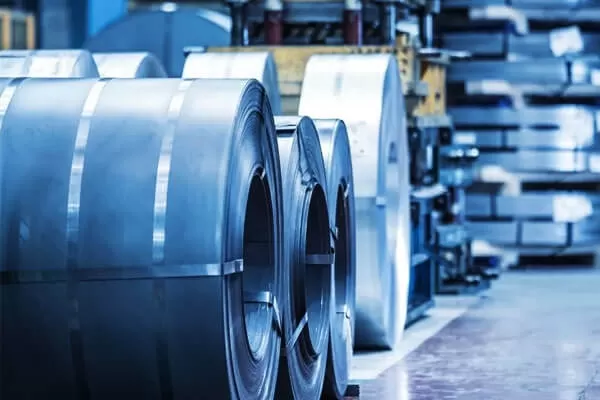
In this article, we'll break down Inconel 600’s core characteristics, international standards, real-world uses, and key considerations for buyers-all optimized to help you make informed decisions and understand why this alloy remains a top choice for demanding industrial applications.


What is Inconel 600 Material?

Definition

Inconel 600 (UNS N06600) is a nickel-based super alloy designed specifically to withstand extreme temperatures, oxidation, and corrosive environments. Classified as a solid-solution-strengthened alloy, it does not rely on heat treatment for strength—instead, its mechanical and chemical properties are derived from its carefully balanced elemental composition and manufacturing process. This makes it highly versatile for applications where consistent performance and ease of fabrication are essential.

Inconel 600 Composition

The performance of Inconel 600 is directly tied to its precise elemental makeup, with core elements working in tandem to deliver its signature properties. Below is a detailed breakdown of its chemical composition, aligned with international standards like ASTM B166:

  • Core Elements: Nickel (Ni) accounts for 72% of the alloy (typical), forming the base that enhances ductility, thermal stability, and resistance to general corrosion. Chromium (Cr) makes up 15-17.5%, a critical component for boosting oxidation resistance and protecting against high-temperature degradation. Iron (Fe) is added at 6-10% to optimize mechanical strength while keeping production costs manageable.
  • Trace Elements: Carbon (C ≤ 0.15%) improves strength and wear resistance; Manganese (Mn ≤ 1.0%) aids in fabrication; Silicon (Si ≤ 0.5%) enhances oxidation resistance; Copper (Cu ≤ 0.5%) and Sulfur (S ≤ 0.015%) are kept to minimal levels to avoid compromising corrosion resistance and ductility.

Each element plays a vital role: Nickel ensures the alloy maintains toughness at both high and low temperatures, Chromium forms a protective oxide layer that prevents oxidation at extreme heats, and Iron adds structural rigidity without sacrificing formability. This balanced composition is what sets Inconel 600 apart from standard stainless steels and other less robust alloys.

Manufacturing Process Overview

The manufacturing of Inconel 600 follows strict protocols to ensure uniformity, purity, and consistent performance. Key steps include:

  • Melting: Vacuum arc remelting (VAR) is the preferred method, which removes impurities and ensures a homogeneous micro structure. This step is critical for avoiding defects that could weaken the alloy in extreme environments.
  • Forging & Rolling: The molten alloy is forged or rolled into various forms (bars, sheets, plates, tubing) while maintaining controlled temperatures to preserve its mechanical properties.
  • Annealing: Heat treatment at 1010-1120°C (1850-2050°F) followed by rapid cooling (quenching) optimizes ductility and removes residual stresses, making the alloy easier to machine and weld.
  • Finishing: Final processing (cutting, grinding, polishing) ensures the alloy meets dimensional specifications and surface quality standards for industrial use.

Strict quality control throughout the manufacturing process guarantees that Inconel 600 products deliver reliable performance in even the most demanding applications.


Inconel 600 material properties

Inconel 600’s reputation is built on its exceptional combination of mechanical strength, thermal stability, and corrosion resistance—properties that make it irreplaceable in industries where failure is not an option. Below is a detailed breakdown of its key performance characteristics.

Mechanical Properties

Inconel 600 exhibits balanced mechanical properties at both room and high temperatures, with a focus on ductility and toughness rather than extreme strength (unlike precipitation-hardened alloys like Inconel 718). Key mechanical properties (per ASTM B166) include:

  • Tensile Strength: ≥ 550 MPa (80 ksi) at room temperature; remains stable up to 980°C (1800°F), with a slight decrease at higher temperatures.
  • Yield Strength: ≥ 240 MPa (35 ksi) at room temperature.
  • Elongation: ≥ 30% (in 50 mm), indicating excellent ductility—critical for forming and welding.
  • Hardness: ≤ 200 HB (Brinell) at room temperature, making it easier to machine than harder supper alloys.

While Inconel 600 is not the strongest nickel alloy (Inconel 718 offers significantly higher tensile strength), its ductility and toughness make it ideal for applications where formability and resistance to impact are essential. It also exhibits moderate fatigue and creep resistance, with optimal performance in operating temperatures up to 980°C (1800°F) for long-term use.

Thermal Properties

Thermal stability is one of Inconel 600’s standout features, making it a top choice for high-temperature applications. Key thermal properties include:

  • Maximum Operating Temperature: 1100°C (2012°F) for short-term exposure (minutes to hours) and 980°C (1800°F) for long-term continuous use.
  • Thermal Conductivity: 15.1 W/m·K at 20°C (68°F), increasing slightly with temperature—ensures efficient heat transfer in thermal applications.
  • Thermal Expansion Coefficient: 13.1 × 10⁻⁶/°C (20-1000°C), which is relatively low for a supper alloy, reducing thermal stress in cyclic temperature environments.
  • Specific Heat Capacity: 440 J/kg·K at 20°C (68°F), allowing the alloy to absorb and dissipate heat effectively.

Inconel 600’s ability to maintain structural integrity and resist oxidation at extreme temperatures sets it apart from conventional alloys, making it indispensable in aerospace and power generation applications.

Corrosion Resistance

Corrosion resistance is another defining feature of Inconel 600, with performance tailored to neutral, alkaline, and high-temperature oxidizing environments. Key corrosion-resistant properties include:

  • Oxidation Resistance: Excellent resistance to oxidation in air, steam, and high-temperature oxidizing atmospheres. The chromium content forms a thin, protective oxide layer that prevents further degradation even at 980°C (1800°F).
  • Neutral/Alkaline Corrosion Resistance: Highly resistant to corrosion in neutral solutions (e.g., water, saltwater) and alkaline environments (e.g., sodium hydroxide, ammonia). This makes it ideal for marine and chemical processing applications.
  • Intergranular & Stress Corrosion Cracking Resistance: Superior resistance to intergranular corrosion (IGC) and stress corrosion cracking (SCC) when exposed to high temperatures and corrosive media—critical for nuclear and petrochemical applications where safety is paramount.

It's important to note Inconel 600’s limitations: it has poor resistance to strong acids (e.g., hydrochloric acid, sulfuric acid) and chloride-rich environments at high temperatures. For these applications, alloys like Inconel 625 or Hastelloy C276 are better suited.

Machinability and Weldability

Inconel 600 is relatively easy to fabricate compared to other supper alloys, thanks to its ductility and lack of need for post-weld heat treatment.

  • Weldability: Compatible with all common welding methods, including TIG (Gas Tungsten Arc Welding), MIG (Gas Metal Arc Welding), and SMAW (Shielded Metal Arc Welding). No post-weld heat treatment is required, which saves time and cost in manufacturing. Welded joints maintain excellent corrosion resistance and mechanical strength, making them suitable for critical applications.
  • Machinability: While harder than carbon steel, Inconel 600 can be machined using carbide tools, slow cutting speeds, and adequate lubrication. Avoiding high cutting temperatures is key to preventing work hardening, which can reduce tool life and surface quality.


International Standards for Inconel 600

Inconel 600 is manufactured and tested to strict international standards to ensure consistency, performance, and interchangeability across suppliers and industries. Adherence to these standards is critical for buyers, as it guarantees that the alloy meets the required specifications for their application.

Key Standards (By Industry & Region)

The most widely recognized standards for Inconel 600 include:

  • ASTM Standards (United States): The gold standard for industrial alloys, with specific standards for different product forms:
  • ASTM B166: Covers bars, rods, and wire of Inconel 600.
  • ASTM B167: Applies to sheets, plates, and foils.
  • ASTM B168: Specifies seamless tubing.
  • ASTM B446: Governs welded pipe and tube.
  • ASTM B564: Covers forgings.

Other Regional & Industry Standards:

  • AMS 5540: Aerospace Material Specification (aerospace-grade Inconel 600).
  • DIN 17750: German industrial standard for nickel-based alloys.
  • EN 10095: European standard for heat-resistant alloys.
  • GB/T 15007: Chinese national standard for nickel-based supper alloys.

Why Standards Matter

Standards ensure that Inconel 600 products from different suppliers have consistent chemical composition, mechanical properties, and quality. This interchangeability is critical for industries like aerospace and nuclear energy, where component replacement must not compromise system performance. For buyers, specifying a standard (e.g., “Inconel 600 per ASTM B167”) ensures that the product meets their application’s requirements and avoids non-compliant or substandard materials.

Material Certificate (MTC/COA) Requirements

When purchasing Inconel 600, always request a Material Test Certificate (MTC) or Certificate of Analysis (COA) from the supplier. This document should include:

  • Chemical composition test results (verified via XRF or wet chemical analysis).
  • Mechanical property test results (tensile strength, yield strength, elongation, hardness).
  • Compliance with the specified standard (e.g., ASTM B166).
  • Manufacturing batch number and product dimensions.

A valid MTC/COA is proof of the alloy’s quality and compliance, helping buyers avoid counterfeit or substandard products.


Applications of Inconel 600 in Industry

Inconel 600’s unique combination of high-temperature stability, corrosion resistance, and formability makes it a top choice for critical applications across multiple industries. Below are its most common uses, organized by sector.

Aerospace Industry

In the aerospace sector, Inconel 600 is used in components that must withstand extreme temperatures and harsh environments. Key applications include:

  • Engine components: Exhaust manifolds, combustion chamber liners, and afterburner parts—where temperatures can exceed 900°C (1650°F).
  • Aircraft structural parts: Heat shields and thermal management components.
  • Heat exchangers: Used in aircraft cooling systems to transfer heat efficiently while resisting oxidation.

Its weldability and reliability make it a preferred material for aerospace manufacturers, where safety and performance are non-negotiable.

Petrochemical & Chemical Industry

In petrochemical and chemical processing, Inconel 600 is used in equipment that handles high-temperature, alkaline, and corrosive media. Common applications include:

  • Reactors and vessels: For processes like ethylene production, ammonia synthesis, and alkaline solution handling.
  • Heat exchangers and pipelines: To transfer heat between corrosive fluids while resisting degradation.
  • Valves and fittings: Critical components that must maintain integrity in high-pressure, high-temperature environments.

Inconel 600’s resistance to alkaline corrosion and oxidation makes it ideal for these applications, where conventional alloys like stainless steel would fail.

Nuclear Industry

The nuclear industry relies on Inconel 600 for its exceptional radiation resistance, corrosion resistance, and thermal stability. Key applications include:

  • Nuclear reactor heat exchangers: Transfer heat from the reactor core to the steam generator while resisting radiation-induced degradation.
  • Steam generators: Tubing and components that handle high-temperature, high-pressure steam.
  • Fuel cladding: Protects nuclear fuel rods from corrosion and radiation.

Inconel 600’s ability to withstand radiation and maintain structural integrity over long service lives makes it a critical material for nuclear power plants.

Other Industries

Beyond aerospace, petrochemical, and nuclear, Inconel 600 is used in a range of other industries, including:

  • Automotive: High-performance exhaust systems for racing cars and heavy-duty vehicles.
  • Power Generation: Boiler superheaters and heat exchangers in coal-fired and gas-fired power plants.
  • Marine: Seawater-resistant components like valves, pumps, and heat exchangers.

Application Case Study

A major petrochemical plant in the Middle East replaced its stainless steel heat exchanger tubes with Inconel 600 to address corrosion and oxidation issues. The plant operates at temperatures up to 950°C (1742°F) and handles alkaline process fluids. After installing Inconel 600 tubes, the heat exchangers achieved a service life of 10 years—up from just 2 years with stainless steel. This resulted in significant cost savings from reduced downtime and maintenance.


Inconel 600 vs. Similar Nickel Alloys

Inconel 600 is often compared to other nickel-based alloys like Inconel 625, Inconel 718, and Hastelloy C276. While all are supper alloys, each has unique properties that make it suitable for specific applications. Below is a detailed comparison to help you choose the right alloy.

Inconel 600 vs. Inconel 718

The most common comparison is between Inconel 600 and Inconel 718, as both are widely used in aerospace and industrial applications. Key differences include:

  • Temperature Resistance: Inconel 600 (max 1100°C short-term) outperforms Inconel 718 (max 650°C short-term) in high-temperature environments.
  • Strength: Inconel 718 is a precipitation-hardened alloy with significantly higher tensile strength (≥ 1100 MPa vs. 550 MPa for 600), making it ideal for high-load applications.
  • Cost: Inconel 600 is more cost-effective than 718, thanks to its simpler composition and manufacturing process.
  • Applications: Choose Inconel 600 for high-temperature/oxidation resistance; choose Inconel 718 for high-strength/load-bearing applications.

Inconel 600 vs. Inconel 625

Inconel 625 is known for its superior corrosion resistance, making it a competitor to Inconel 600 in chemical applications. Key differences:

  • Corrosion Resistance: Inconel 625 offers better resistance to strong acids (e.g., hydrochloric acid) and chloride-rich environments than 600.
  • Temperature Resistance: Inconel 600 has a higher maximum operating temperature (1100°C vs. 980°C for 625).
  • Cost: Inconel 600 is more affordable than 625.
  • Applications: Choose Inconel 625 for strong acid/corrosive environments; choose 600 for high-temperature oxidation resistance.

Inconel 600 vs. Hastelloy C276

Hastelloy C276 is a corrosion-resistant alloy designed for extreme chemical environments. Key differences:

  • Corrosion Resistance: Hastelloy C276 is superior to Inconel 600 in strong acids, chlorides, and mixed chemical environments.
  • Temperature Resistance: Inconel 600 has better high-temperature oxidation resistance (1100°C vs. 900°C for Hastelloy C276).
  • Cost: Hastelloy C276 is significantly more expensive than Inconel 600.
  • Applications: Choose Hastelloy C276 for extreme chemical corrosion; choose Inconel 600 for high-temperature applications.

How to Choose the Right Alloy

When selecting between Inconel 600 and similar alloys, follow this decision tree:

  1. What is the maximum operating temperature? If ≥ 980°C, choose Inconel 600.
  2. Is the environment corrosive (strong acids/chlorides)? If yes, choose Inconel 625 or Hastelloy C276.
  3. Does the application require high strength/load-bearing capacity? If yes, choose Inconel 718.
  4. What is your budget? Inconel 600 is the most cost-effective option for high-temperature/alkaline applications.


Buying Guide for Inconel 600

Purchasing Inconel 600 requires careful consideration to ensure you get a high-quality, compliant product that meets your application’s needs. Below are key tips for buyers.

Key Considerations for Buyers

  • Choose Reputable Suppliers: Select suppliers with ISO certification, a proven track record in nickel alloys, and the ability to provide MTC/COA. Avoid unknown suppliers that cannot verify product quality.
  • Confirm Product Form & Dimensions: Inconel 600 is available in bars, sheets, plates, tubing, and forgings. Ensure the supplier can provide the exact form and dimensions you need.
  • Specify the Standard: Clearly state the required standard (e.g., ASTM B167 for sheets) in your purchase order to avoid non-compliant products.
  • Understand Cost Factors: Cost is influenced by alloy grade, product form (tubing is more expensive than sheets), quantity, and delivery time. Bulk orders often qualify for discounts.

Common Quality Issues to Avoid

When buying Inconel 600, beware of these common quality issues:

  • Non-Compliant Composition: Some suppliers reduce nickel or chromium content to cut costs, which compromises corrosion resistance and temperature stability. Always verify composition via MTC/COA.
  • Poor Surface Quality: Scratches, oxidation, or defects on the surface can reduce corrosion resistance and mechanical strength. Inspect products before acceptance.
  • Lack of Material Certification: Suppliers that cannot provide MTC/COA are likely selling substandard or counterfeit products.

Inspection and Testing

For critical applications, consider third-party inspection and testing to verify product quality:

  • Composition Testing: X-ray fluorescence (XRF) or wet chemical analysis to confirm elemental composition.
  • Mechanical Testing: Tensile testing, hardness testing, and elongation testing to verify mechanical properties.
  • Corrosion Testing: Salt spray testing or immersion testing to confirm corrosion resistance (for marine/chemical applications).

Third-party testing provides an extra layer of assurance that the product meets your requirements.


FAQs About Inconel 600

Below are answers to the most frequently asked questions about Inconel 600, based on user search intent and industry queries.

Q1: What is the maximum operating temperature of Inconel 600?

A1: Inconel 600 can withstand short-term temperatures up to 1100°C (2012°F) and long-term continuous use up to 980°C (1800°F). This makes it ideal for high-temperature applications like aerospace engine components and power generation boilers.

Q2: Is Inconel 600 corrosion-resistant to seawater?

A2: Yes, Inconel 600 is resistant to seawater corrosion, thanks to its high nickel and chromium content. However, it is not as resistant to chloride-rich environments as Inconel 625 or Hastelloy C276. For extreme marine applications, consider these alternatives.

Q3: Can Inconel 600 be welded?

A3: Yes, Inconel 600 is highly weldable using common methods like TIG, MIG, and SMAW. No post-weld heat treatment is required, which simplifies manufacturing. Welded joints maintain excellent corrosion resistance and mechanical strength.

Q4: How does Inconel 600 compare to stainless steel?

A4: Inconel 600 has a higher nickel content (72% vs. ~8-10% for stainless steel), which provides superior high-temperature stability and corrosion resistance. Stainless steel is more cost-effective but fails in extreme temperatures and corrosive environments where Inconel 600 excels.

Q5: Are different suppliers’ Inconel 600 compositions the same?

A5: Core compositions are consistent across reputable suppliers, as they must comply with international standards (e.g., ASTM B166) that specify strict ranges for nickel, chromium, and iron. Trace elements may vary slightly within standard limits, but this does not affect core performance. Always verify with an MTC/COA.

Q6: What is the hardness of Inconel 600?

A6: Inconel 600 has a Brinell hardness of ≤ 200 HB at room temperature, which is relatively soft for a supper alloy. This makes it easier to machine and form compared to harder alloys like Inconel 718.


Conclusion: Why Inconel 600 Is a Top Choice for Extreme Environments

Inconel 600 stands out as a versatile, reliable nickel-based supper alloy, offering exceptional high-temperature stability, corrosion resistance, and formability. Its balanced properties make it irreplaceable in critical industries like aerospace, petrochemical, and nuclear energy, where performance in extreme environments is essential.

Key takeaways: Inconel 600 excels in high-temperature oxidizing and alkaline environments, is easy to weld and machine, and complies with strict international standards. When compared to similar alloys like Inconel 718 (higher strength) or 625 (better acid corrosion resistance), Inconel 600 offers the best balance of performance and cost for high-temperature applications.

For buyers, the key to success is choosing a reputable supplier, specifying the correct standard, and verifying product quality with an MTC/COA. Whether you’re manufacturing aerospace components, chemical reactors, or nuclear heat exchangers, Inconel 600 delivers the reliability and performance you need.

Ready to source Inconel 600? Contact a trusted supplier today to request quotes, technical support, or custom solutions tailored to your application.

GET A QUOTE
Feel free to challenge us with your special metal requirements and value-added processing needs by submitting this form or use our email.
Looking forward to your information!
Consulting Company
Allianz Steel Group specializing in the supplies of special metal and related processing service, was established in 1996.
Contact Us

+86 0731 82250427

+86 15308477503

info@ronsteel.com

25th floor, C3 Building, Wanda Plaza, Kaifu District, Changsha, Hunan Province, China