Kovar alloy is a specialized nickel-based alloy that is widely used in high-precision and electronic applications due to its low coefficient of thermal expansion (CTE) and excellent weldability. It is especially well known for its ability to closely match the thermal expansion behavior of glass and ceramic materials, making it an ideal material for hermetic sealing applications.
Kovar is primarily composed of iron, nickel, and cobalt. Iron forms the majority of the alloy, while nickel and cobalt are present at approximately 29% and 17%, respectively. This carefully controlled composition gives Kovar its unique thermal and mechanical characteristics.
Kovar was originally developed in the 1930s by Corning Inc. in the United States to address the need for a metal that could reliably bond with glass without cracking under temperature changes. Since its introduction, Kovar has become a standard material in the electronics, aerospace, and precision instrument industries due to its excellent mechanical properties, corrosion resistance, and machinability.
When heated, Kovar expands at a controlled and predictable rate. Its thermal expansion closely matches that of many types of glass, which minimizes thermal stress during heating and cooling cycles. This property allows Kovar to maintain structural integrity in sealed assemblies.
The alloy also exhibits good electrical conductivity and stable magnetic properties, making it suitable for sensitive electronic and electromagnetic environments.
Kovar is extensively used as a conductor and structural material in electronic components such as:
Transistors
Integrated circuits
Electronic and hermetic packages
Its stable thermal behavior helps improve the reliability, speed, and efficiency of electronic devices. Kovar is also commonly used in vacuum devices such as light bulbs and vacuum tubes, as it does not produce gas or electrical arcing, ensuring safe and stable operation.
In the construction sector, Kovar is used for electrical cable trays, utility poles, and structural components that require high strength and corrosion resistance. Its durability allows it to perform reliably in demanding environments.
Kovar plays a critical role in the aerospace industry. It is used to manufacture high-temperature and high-stress components, including:
Aircraft engine bearings and gears
Rocket engine fuel nozzles
Oxidizer tanks and aerospace structural parts
The alloy maintains strength and dimensional stability under extreme temperatures, ensuring operational safety and efficiency.
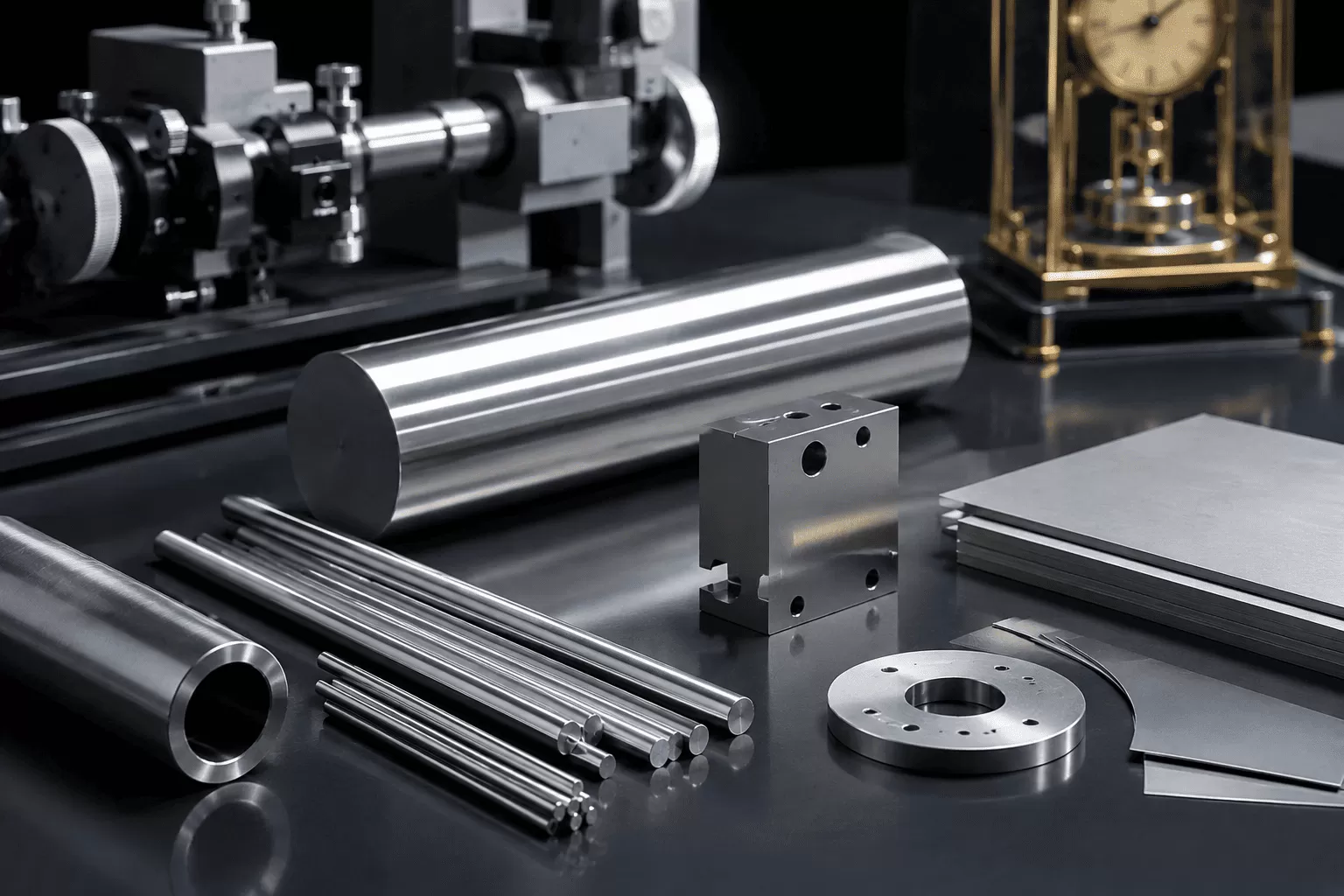
Thanks to its dimensional stability and mechanical strength, Kovar is widely used in high-precision instruments, such as:
Astronomical telescopes
Precision measurement devices
These applications require materials that remain stable despite environmental temperature changes.
Kovar is also used in medical equipment, including high-precision components for:
Pacemakers
Artificial joints and implants
Its reliability and corrosion resistance make it suitable for long-term medical applications.
In solar technology, Kovar is used for mounting structures and connectors in solar panels, where thermal stability and mechanical reliability are essential for long service life.
Low Coefficient of Thermal Expansion
Closely matches glass and ceramics, ensuring dimensional stability in temperature-sensitive applications.
Excellent Mechanical Properties
High strength, hardness, toughness, and tensile strength, suitable for precision and impact-resistant components.
Good Corrosion Resistance
Performs well in water and various chemical environments.
Excellent Machinability and Fabrication
Can be processed through forging, hot rolling, cold rolling, and welding, making it suitable for complex shapes and precision parts.
Kovar alloy is a high-performance nickel-based alloy valued for its low thermal expansion, strong mechanical properties, good corrosion resistance, and excellent workability. These characteristics make it indispensable in electronics, aerospace, medical devices, precision instruments, construction, and renewable energy applications.
As industries continue to demand higher precision and reliability, Kovar remains a critical material for advanced engineering and high-technology solutions.
2026-09-20 00:00:00
2026-09-18 00:00:00
2026-09-04 16:07:31



25th floor, C3 Building, Wanda Plaza, Kaifu District, Changsha, Hunan Province, China
 en
en
 ko
ko
 ru
ru
 es
es
 ar
ar
 hi
hi