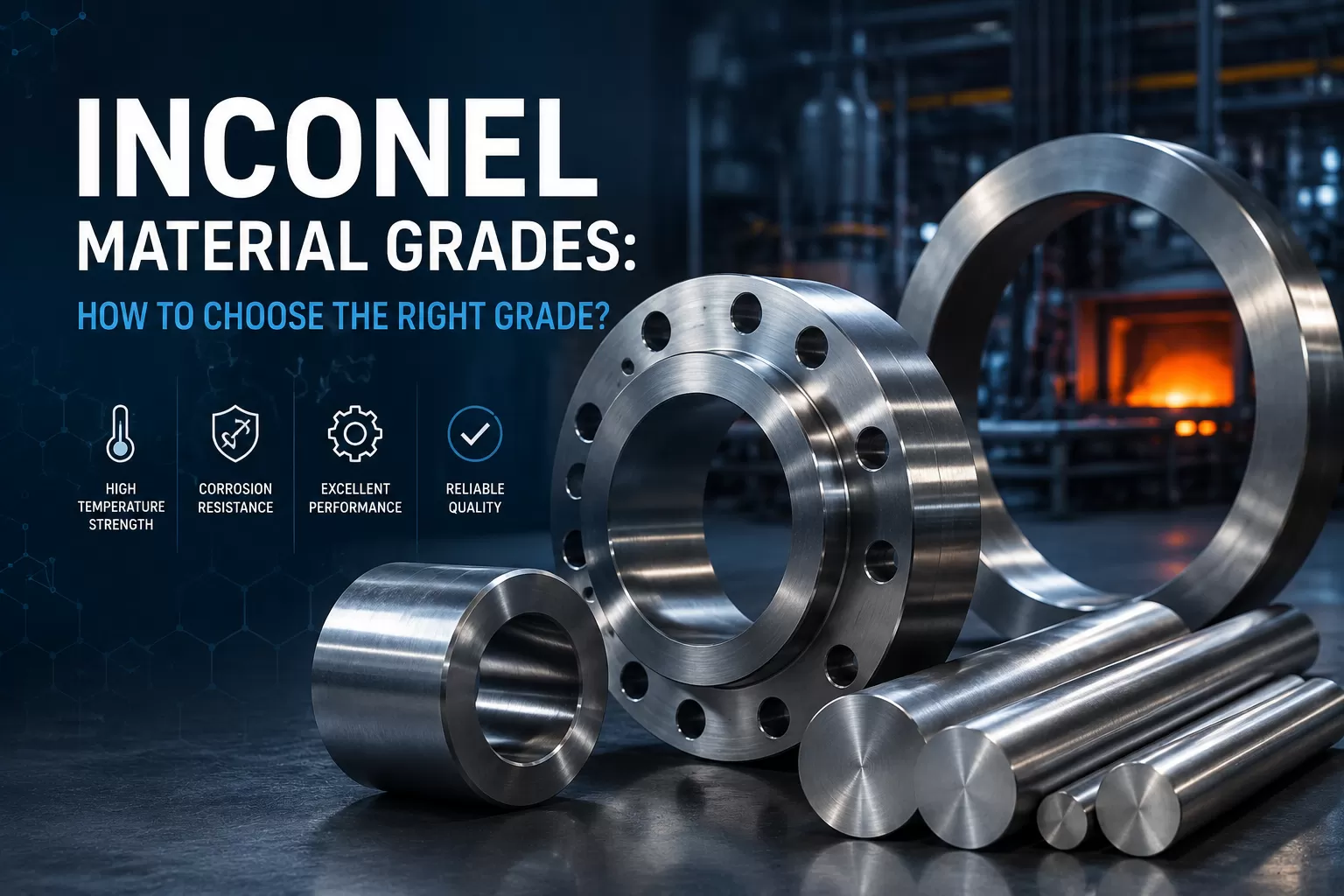
Nickel-based alloys represent the pinnacle of metallic materials engineering, delivering exceptional performance across the most demanding applications — from the searing heat of jet engine turbines to the corrosive environments of nuclear reactors and chemical processing plants. This comprehensive guide covers both high-temperature superalloys and corrosion-resistant nickel alloys, providing detailed insights into their compositions, properties, and critical applications.
A nickel-based alloy is defined as any metallic material in which nickel is the primary alloying element — typically exceeding 30 wt% and often exceeding 50 wt% in commercial grades. Nickel provides a face-centered cubic (FCC) austenitic structure that remains stable up to the melting point, offering exceptional ductility, thermal stability, and freedom from ductile-to-brittle transitions. The addition of alloying elements like chromium, molybdenum, copper, aluminum, titanium, and niobium enables a wide range of strengthening mechanisms and corrosion-resistant properties.
For a complete technical breakdown of the distinction between the broad "nickel alloy" category and the specific Inconel trademark, read this guide:
High-temperature nickel superalloys are engineered for sustained performance at temperatures exceeding 540°C, often reaching 1,100°C in advanced grades. Their strengthening mechanisms include solid-solution hardening, carbide precipitation, and precipitation hardening via γ′ (gamma-prime) and γ″ (gamma-double-prime) phases.
Developed by Special Metals Corporation in the 1960s, Inconel 718 is the most widely used nickel-iron-chromium superalloy globally. Its popularity stems from an outstanding combination of high strength (tensile ≥1,310 MPa in aged condition), excellent weldability, and exceptional creep resistance up to 700°C. The alloy is strengthened by γ″ (Ni₃Nb) and γ′ (Ni₃(Al, Ti)) precipitates through a standard double-aging heat treatment.
In the Chinese standard, the corresponding grade is GH4169, which delivers superior comprehensive performance from -253°C to 700°C. Inconel 718 is extensively used in aircraft engine discs, turbine shafts, rocket motor casings, nuclear reactor components, and extrusion tooling.
For deeper technical insights, explore these dedicated articles:
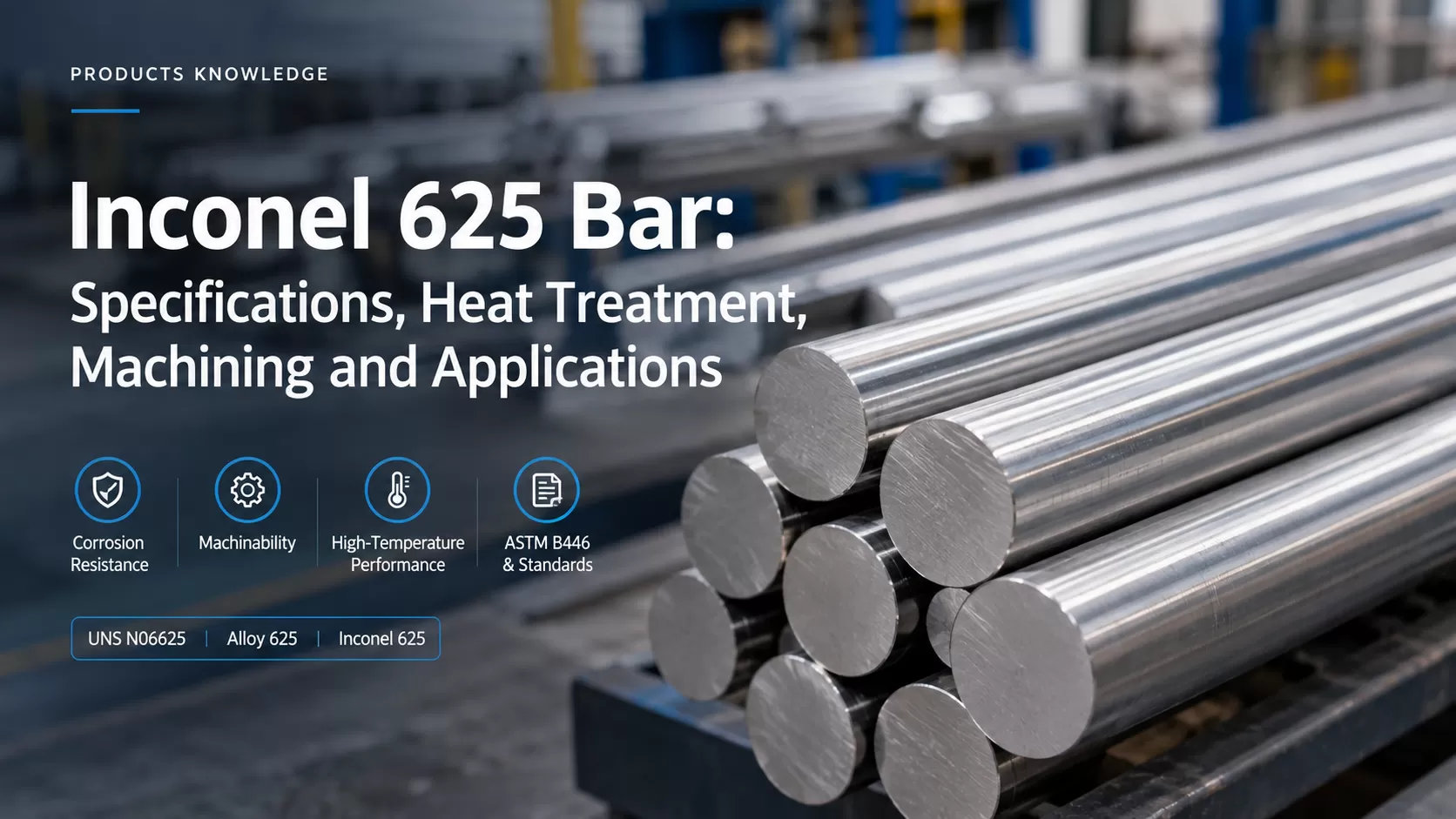
Originally developed for steam line piping in supercritical power plants, Inconel 625 has become a versatile nickel-chromium-molybdenum-niobium alloy with outstanding resistance to a wide spectrum of corrosive media. Its high strength (solid-solution strengthened with precipitation potential) and excellent fatigue resistance make it ideal for aerospace, chemical processing, and marine engineering. The alloy has recently gained attention in the emerging hydrogen economy and molten salt reactor applications.
Learn more about its thermal and hydrogen applications:
Inconel 713C is a precipitation-hardening nickel-chromium-based cast superalloy specifically designed for high-temperature applications requiring exceptional creep and rupture strength. Its high aluminum and titanium content promotes a high volume fraction of γ′ precipitates, delivering sustained performance at temperatures approaching 950°C. This alloy is the material of choice for complex-shaped components such as aircraft turbine blades and vanes produced via investment casting.
A classic precipitation-hardening nickel-chromium alloy strengthened by titanium and aluminum, Nimonic 80A was among the first superalloys to achieve widespread use in aircraft gas turbines. It maintains high creep resistance and oxidation resistance up to 815°C and remains widely used today for exhaust valves, turbine blades, and high-temperature fasteners in aerospace and automotive racing applications.
Alloy 230 is a nickel-chromium-tungsten alloy offering exceptional oxidation resistance at temperatures up to 1,100°C — outperforming conventional stainless steels and many nickel alloys in cyclic oxidation environments. Its high creep-rupture strength and excellent fabricability make it the preferred material for power generation components, industrial furnace fixtures, and aerospace afterburner parts.
Alloy 600 is a straightforward but highly effective nickel-chromium alloy (72% Ni, 14-17% Cr, balance Fe) that provides excellent oxidation resistance and good mechanical properties at elevated temperatures. It is widely used in heat treatment equipment, chemical process vessels, and nuclear reactor components, offering reliable resistance to chloride-ion stress corrosion cracking and high-temperature carburization.
📈 Performance Evolution: Between the early 1940s and the late 1970s — a span of approximately 40 years — the service temperature of nickel-based superalloys rose from 700°C to 1,100°C, an average annual increase of roughly 10°C. Today, advanced alloys like MA6000 achieve tensile strength of 2,220 MPa at 1,100°C, enabling the latest generation of high-efficiency aircraft engines.
Corrosion-resistant nickel alloys are defined by their high chromium, molybdenum, and copper contents, which provide exceptional passive film stability in acidic and chloride-laden environments. Unlike conventional stainless steels, these alloys resist pitting, crevice corrosion, and stress corrosion cracking in the harshest industrial conditions.
Alloy 690 is a high-chromium nickel alloy (approximately 30% Cr) specifically engineered for extreme corrosion and oxidation resistance. It is the premier material for steam generator tubing in pressurized water nuclear reactors (PWRs), where it withstands high-temperature, high-pressure aqueous environments. The alloy also maintains outstanding oxidation resistance up to 900°C.
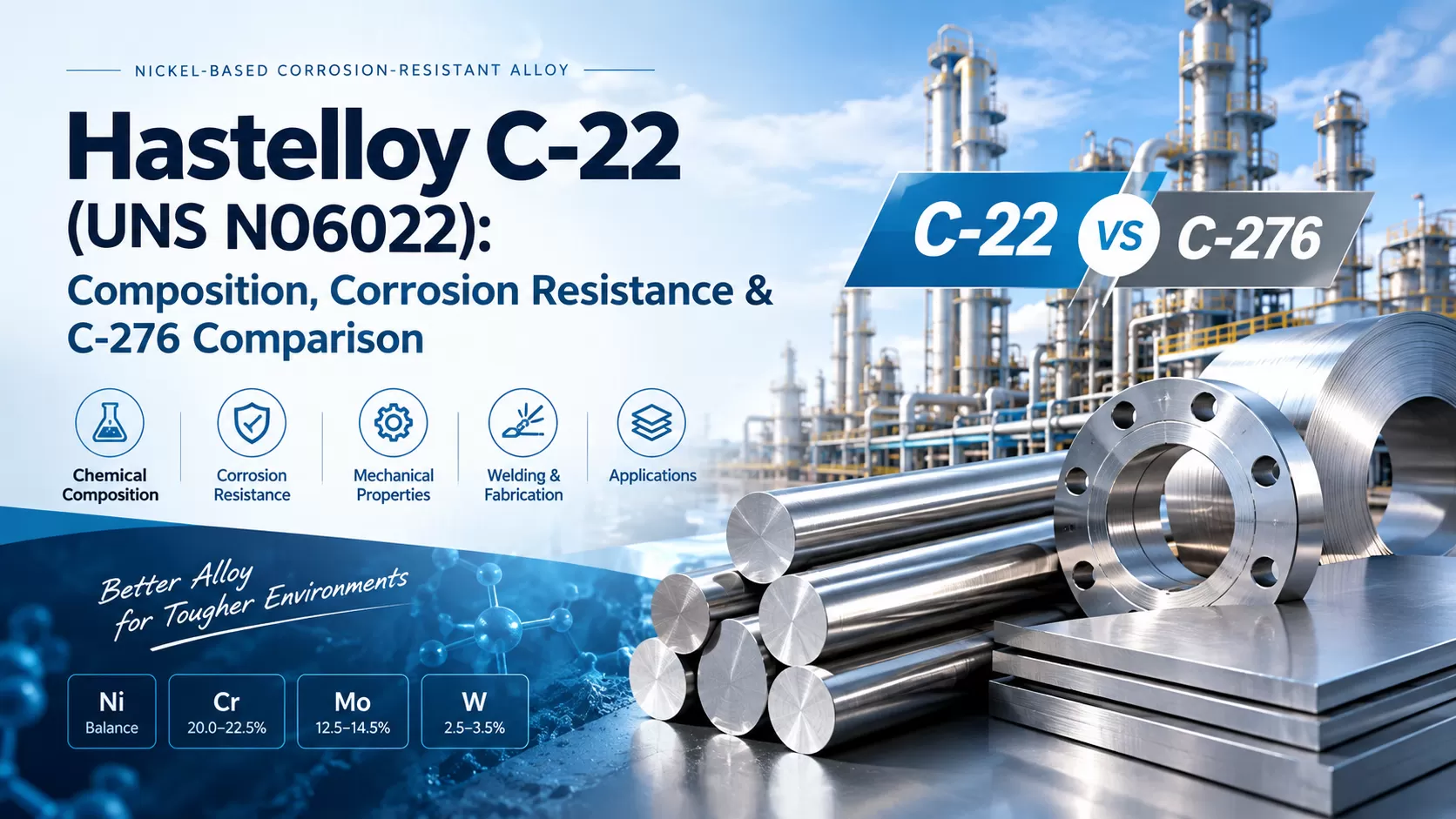
Alloy C-22 is a nickel-chromium-molybdenum alloy with enhanced resistance to oxidizing media compared to its predecessor C-276. It exhibits outstanding resistance to pitting, crevice corrosion, and chloride-induced stress corrosion cracking, making it the gold standard for chemical processing, flue gas desulfurization (FGD) systems, and pharmaceutical equipment.
Alloy 686 is a Ni-Cr-Mo alloy delivering exceptional resistance to a broad spectrum of corrosive environments, including concentrated sulfuric acid and hydrochloric acid. Its unique chemistry provides superior resistance to stress corrosion cracking in chloride-containing media, making it valuable for chemical reactors, pollution control equipment, and offshore oil and gas components.
Alloy 400 (Monel 400) is a nickel-copper solid-solution alloy that has been a standard material for marine engineering and chemical processing for decades. It offers excellent resistance to seawater corrosion, salt spray, and a wide range of acidic and alkaline media, with outstanding weldability and moderate strength.
Alloy 200 is commercially pure nickel (≥99.0%) valued for its high thermal and electrical conductivity, excellent resistance to caustic alkalis, and outstanding ductility. It is used in food processing, electronics, and aerospace structural components where non-magnetic properties are required.
Alloy 20 is a nickel-iron-chromium alloy with added copper and molybdenum, developed specifically to resist sulfuric acid. Its 30-35% nickel content provides robust resistance to chloride stress corrosion cracking. The alloy is a staple in chemical, pharmaceutical, and food processing industries where hot sulfuric, phosphoric, and nitric acids are handled.
For procurement professionals and engineers working across international standards, understanding material equivalents is essential for seamless global sourcing. Ronsco provides a comprehensive cross-reference guide:
Despite their outstanding corrosion resistance, nickel alloys are not completely immune to attack. Understanding specific corrosion mechanisms — such as pitting, intergranular attack, and stress corrosion cracking — is essential for correct material selection in demanding environments. This comprehensive overview provides critical insights:
Navigating ASTM standards is a daily necessity for engineers, procurement teams, and quality control personnel. From ASTM B564 (nickel alloy forgings) to ASTM B443 (sheet and strip), understanding the appropriate specifications ensures material compliance and traceability. Ronsco provides a comprehensive practical guide to these standards:
Nickel-based alloys are poised for continued growth as industries demand higher operating temperatures, greater corrosion resistance, and longer service lives. The hydrogen economy, advanced nuclear reactors, next-generation aerospace propulsion, and deep-sea resource extraction all depend on the unique properties of nickel alloys. Ongoing research into composition optimization, advanced manufacturing techniques (including additive manufacturing), and coating technologies promises to further extend the performance envelope of this remarkable class of materials. Ronsco remains at the forefront of the nickel alloy industry, providing high-quality materials, expert technical guidance, and full supply chain support to customers worldwide.



25th floor, C3 Building, Wanda Plaza, Kaifu District, Changsha, Hunan Province, China
 en
en
 ko
ko
 ru
ru
 es
es
 ar
ar
 hi
hi