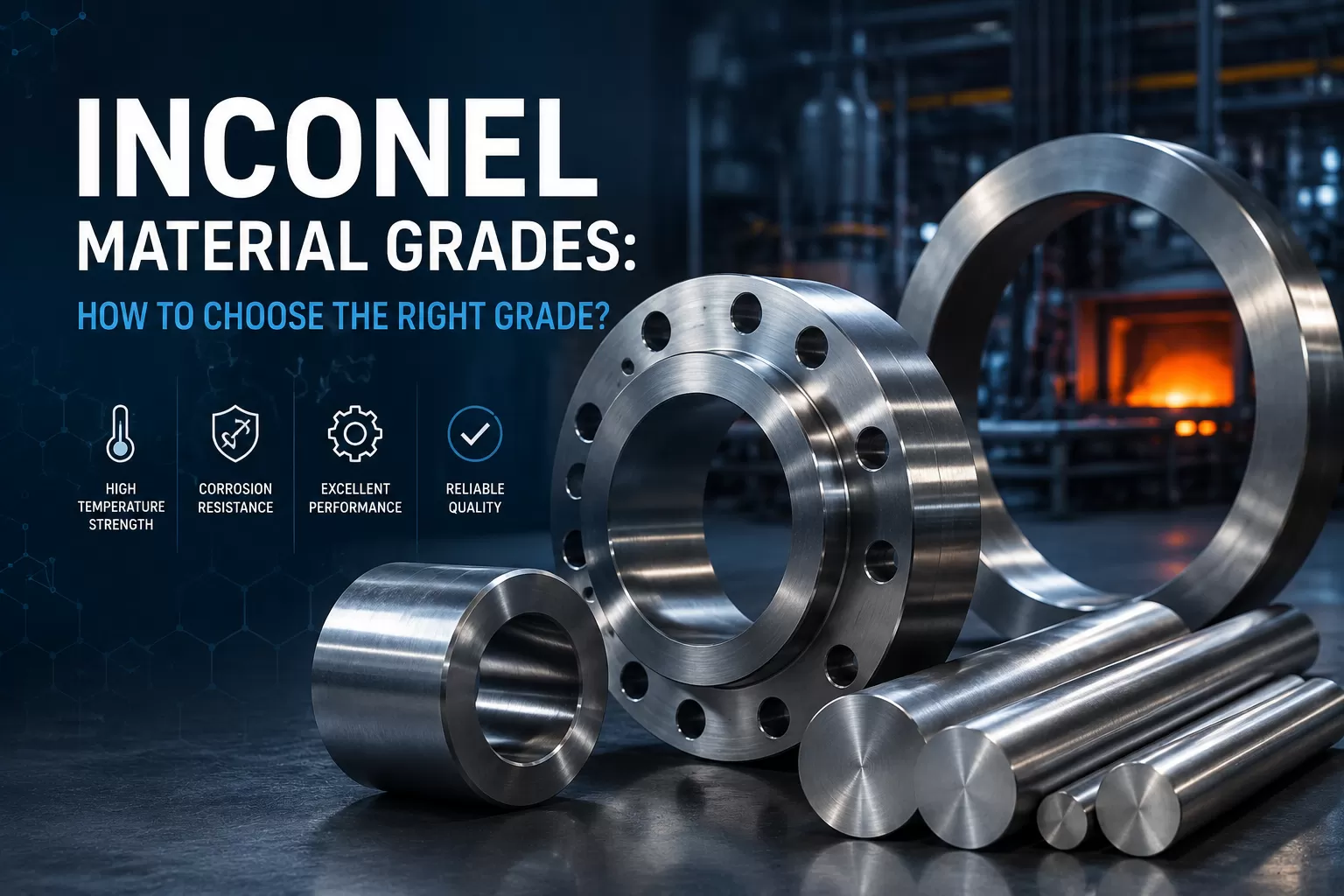
When choosing a high-performance nickel alloy for marine, chemical, or high-temperature applications, Monel 400 and Inconel 625 are two of the most commonly compared materials. Both offer excellent corrosion resistance and mechanical reliability, but they are designed for different operating conditions and performance priorities.
This article provides a detailed comparison of Monel 400 vs Inconel 625 to help engineers, designers, and procurement professionals select the right alloy.
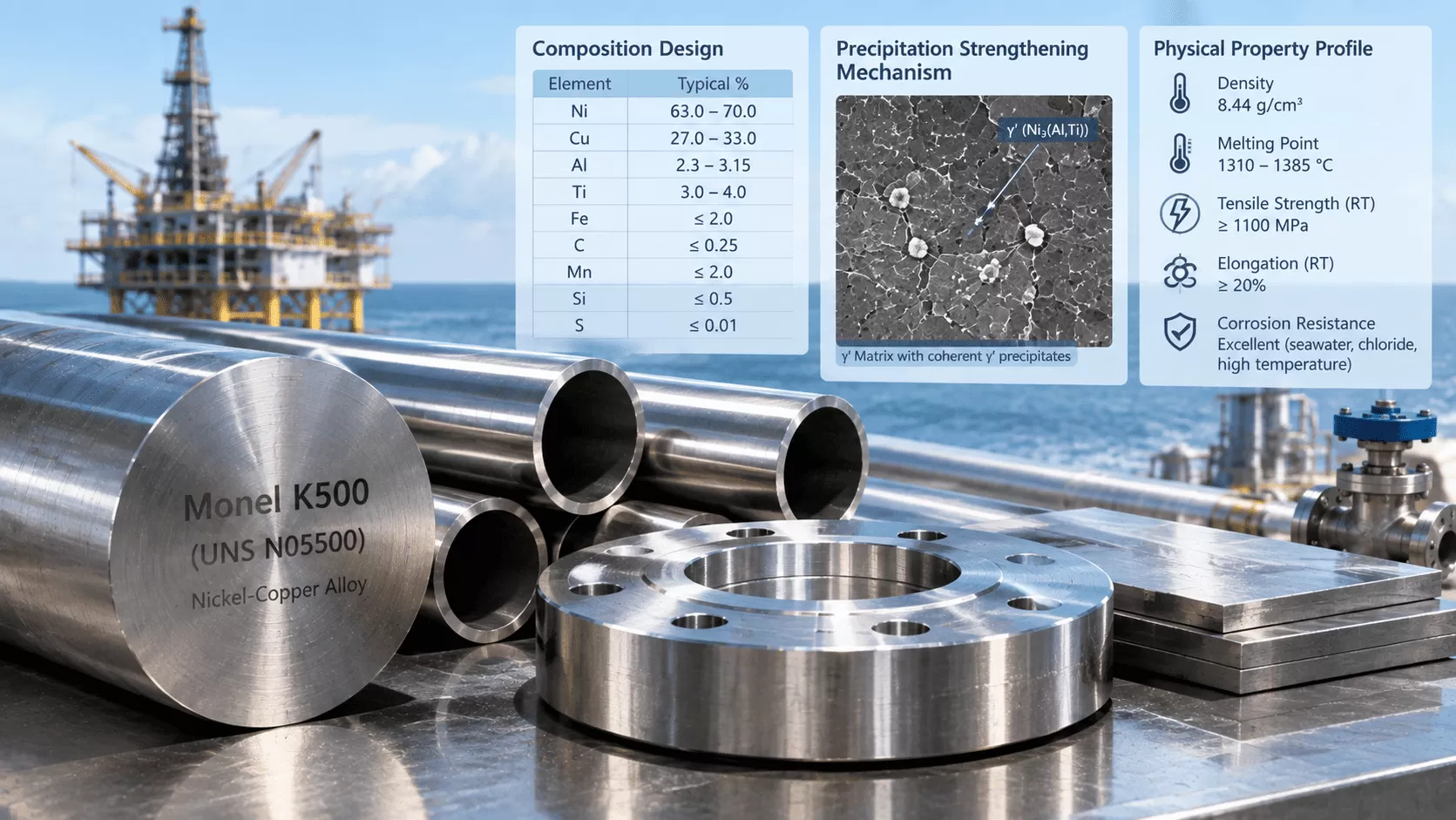
Monel 400 is a nickel-copper alloy known for its outstanding resistance to seawater, hydrofluoric acid, and alkaline environments. It is widely used in marine engineering and chemical processing equipment.
Inconel 625 is a nickel-chromium-molybdenum-niobium alloy designed for high strength, excellent fatigue resistance, and superior performance at elevated temperatures.
| Element | Monel 400 | Inconel 625 |
|---|---|---|
| Nickel (Ni) | ~63–70% | ~58% min |
| Copper (Cu) | ~28–34% | — |
| Chromium (Cr) | — | 20–23% |
| Molybdenum (Mo) | — | 8–10% |
| Niobium (Nb) | — | 3.15–4.15% |
| Iron (Fe) | ≤2.5% | ≤5% |
Key takeaway: Monel 400 is optimized for corrosion resistance in marine and chemical environments, while Inconel 625 is engineered for strength and high-temperature performance.
Excellent resistance to seawater, brine, and marine atmospheres.
Outstanding performance in hydrofluoric acid and alkaline solutions.
Highly resistant to chloride-induced stress corrosion cracking.
Excellent resistance to oxidation and scaling at high temperatures.
Strong resistance to pitting and crevice corrosion.
Performs well in seawater and aggressive chemical environments, especially under stress.
Winner for marine corrosion resistance: Monel 400
Winner for high-temperature corrosion resistance: Inconel 625
| Property | Monel 400 | Inconel 625 |
|---|---|---|
| Tensile Strength | ~550 MPa (80 ksi) | ~827 MPa (120 ksi) |
| Yield Strength | ~240 MPa (35 ksi) | ~414 MPa (60 ksi) |
| Elongation | ~35% | ~30% |
Key takeaway: Inconel 625 offers significantly higher strength and fatigue resistance, while Monel 400 provides excellent ductility and toughness.
Monel 400 performs well up to approximately 480°C (900°F), beyond which its mechanical strength declines.
Inconel 625 is designed for high-temperature environments and maintains strength and oxidation resistance up to approximately 980°C (1800°F).
Winner for high-temperature applications: Inconel 625
Both alloys offer excellent weldability and can be fabricated using standard welding methods such as TIG and MIG.
Monel 400 is easier to machine and form due to its simpler alloy structure.
Inconel 625 is more difficult to machine but offers superior performance in extreme environments.
Marine engineering components
Pump shafts and propeller shafts
Heat exchangers and condensers
Chemical processing equipment
Oil and gas piping
Aerospace engine components
Offshore and subsea equipment
Heat exchangers in high-temperature environments
Oil and gas wellhead components
Nuclear reactor systems
Inconel 625 is typically more expensive than Monel 400 due to its complex alloy composition and higher performance capabilities.
Monel 400 offers a cost-effective solution for corrosion resistance in marine and chemical environments where extreme strength is not required.
| Requirement | Best Choice |
|---|---|
| Marine and seawater corrosion | Monel 400 |
| High strength and fatigue resistance | Inconel 625 |
| High-temperature service | Inconel 625 |
| Hydrofluoric acid resistance | Monel 400 |
| Cost-sensitive corrosion applications | Monel 400 |
Both Monel 400 and Inconel 625 are premium nickel-based alloys with outstanding corrosion resistance and mechanical performance. The right choice depends on your application requirements:
Choose Monel 400 for marine environments, chemical processing, and applications involving hydrofluoric acid or alkaline solutions.
Choose Inconel 625 for high-temperature, high-stress, and high-performance applications where strength and fatigue resistance are critical.
Selecting the appropriate alloy ensures longer service life, improved safety, and optimal performance for your industrial projects.
2026-09-20 00:00:00
2026-09-18 00:00:00
2026-09-04 16:07:31



25th floor, C3 Building, Wanda Plaza, Kaifu District, Changsha, Hunan Province, China
 en
en
 ko
ko
 ru
ru
 es
es
 ar
ar
 hi
hi