When selecting nickel-based superalloys for high-temperature and corrosive environments, Alloy 600 and Alloy 625 are two of the most popular and reliable options in the industry. These two materials share core nickel-based properties but differ significantly in alloy composition, performance thresholds, and application suitability—differences that can make or break the longevity and safety of your project.
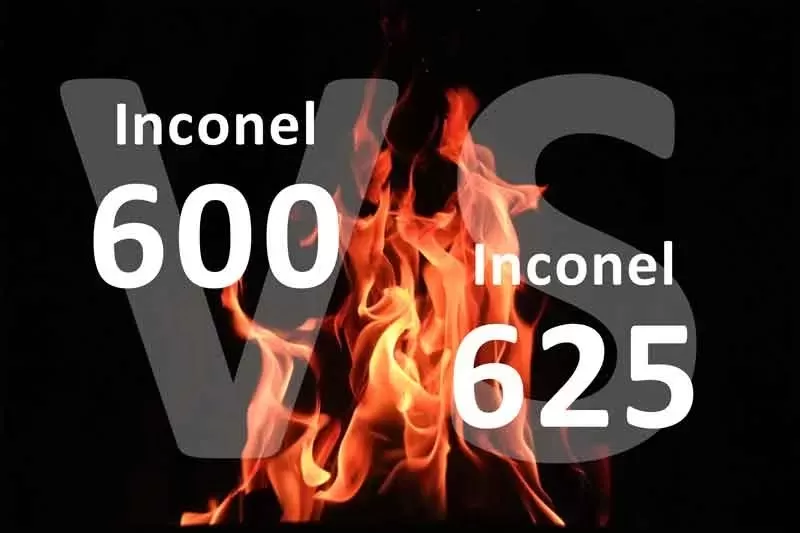
Whether you're sourcing materials for chemical processing, aerospace components, power generation equipment, or marine engineering, understanding the key distinctions between Alloy 600 and Alloy 625 is critical to making a cost-effective and high-performance decision. In this comprehensive guide, we compare the two alloys across 5 critical performance areas, break down their ideal use cases, and help you determine which one is the best fit for your specific high-temperature and corrosive environment needs.
Corrosion resistance is the make-or-break factor for materials in chemical processing, marine, and industrial applications where exposure to acids, chlorides, and oxidizing agents is common. Below is a detailed breakdown of how Alloy 600 and Alloy 625 perform in these scenarios:
| Performance Feature | Alloy 600 | Alloy 625 | |
|---|---|---|---|
| Oxidation Resistance | Good up to 1,100°F (593°C); excels in non-oxidizing acids (e.g., dilute hydrochloric acid) and neutral salt solutions. | Exceptional up to 1,800°F (982°C); maintains resistance in both oxidizing and reducing environments, including seawater and harsh industrial chemicals. | |
| Chloride Stress Corrosion Cracking (CSCC) Resistance | Prone to stress corrosion cracking in chloride-rich environments (e.g., marine saltwater, brine solutions) when exposed to elevated temperatures. | Excellent resistance to pitting, crevice corrosion, and chloride stress corrosion cracking—ideal for high-chloride environments like offshore platforms and desalination plants. | |
| Acid Resistance | Resists mild to moderate concentrations of sulfuric acid, acetic acid, and citric acid; less effective in strong oxidizing acids (e.g., concentrated nitric acid). | Superior to Alloy 600 in resisting phosphoric, nitric, sulfuric, and hydrochloric acids—even at high concentrations and elevated temperatures. | |
| General Corrosion Rate |
|
Very low even in harsh environments (≤0.1 mm/year); maintains structural integrity longer in corrosive media. |
Corrosion Resistance Summary: Alloy 600 delivers reliable corrosion resistance for mild to moderate environments but falls short in highly aggressive conditions—especially those with high chloride levels or strong oxidizing acids. Alloy 625, by contrast, is a premium corrosion-resistant alloy that excels in the harshest chemical and marine environments, making it the top choice for applications where corrosion failure is not an option.
High-temperature strength and creep resistance are essential for materials used in power generation (boilers, turbines), aerospace (jet engines), and industrial furnaces—where prolonged exposure to extreme heat can cause deformation or failure. Here's how Alloy 600 and Alloy 625 stack up:
| Performance Feature | Alloy 600 | Alloy 625 |
|---|---|---|
| Maximum Service Temperature (Continuous) | Up to 1,000°F (538°C); limited performance above this threshold. | Up to 2,000°F (1,093°C); maintains strength and stability at extreme temperatures. |
| Creep Resistance (Long-Term Heat Exposure) | Moderate; creep deformation increases over time at temperatures above 800°F (427°C), reducing structural integrity. | Excellent; high molybdenum (Mo) and niobium (Nb) content inhibits creep, maintaining shape and strength even under prolonged high-temperature stress. |
|
Thermal Cycling & Fatigue Resistance |
Performs well in moderate thermal cycling but susceptible to deformation and fatigue under long-term thermal stress (e.g., repeated heating/cooling cycles). | Superior thermal-fatigue strength; withstands frequent thermal cycling without cracking or deformation—ideal for aerospace and power generation components. |
| Tensile Strength at High Temperatures (1,000°F/538°C) | Approx. 65 ksi (448 MPa) | Approx. 100 ksi (689 MPa) – 54% higher than Alloy 600. |
High-Temperature Performance Summary: Alloy 600 is suitable for low-to-moderate temperature applications (≤1,000°F) where creep and thermal fatigue are not major concerns. Alloy 625, however, is engineered for extreme heat—offering industry-leading creep resistance, thermal cycling performance, and high-temperature strength that makes it indispensable for aerospace, gas turbines, and high-temperature industrial processes.
Weldability and fabrication ease directly impact project timelines, labor costs, and the quality of the final product—especially for complex structures like heat exchangers, pressure vessels, and welded components. Here's a comparison of Alloy 600 and Alloy 625 in this area:
| Performance Feature | Alloy 600 | Alloy 625 |
|---|---|---|
| Weldability | Good (can be welded using GTAW, GMAW, and SMAW processes) but prone to hot cracking at high temperatures due to carbon segregation. |
Excellent; low carbon content and balanced alloy composition prevent hot cracking—can be easily welded without preheating using standard processes. |
|
Formability |
Good for basic forming (rolling, bending, stamping) but more challenging in high-stress or complex shapes (may require annealing to reduce work hardening). |
Superior formability; can be bent, rolled, stamped, and machined into complex shapes with minimal work hardening—reducing fabrication time and costs. |
|
Heat Treatment Requirements |
Preheating (200–300°F/93–149°C) and post-weld heat treatment (PWHT) are often required to reduce residual stress and prevent cracking. |
No preheating or post-weld heat treatment is needed for most applications—simplifying fabrication and reducing project lead times. |
|
Machinability |
Moderate; requires sharp tools and slow cutting speeds to avoid work hardening. |
Good; can be machined with standard tools (with proper lubrication) despite its high strength. |
Weldability & Fabrication Summary: Alloy 600 is fabricable but requires additional steps (preheating, PWHT) to ensure weld quality—adding complexity and cost to manufacturing. Alloy 625 is the clear winner here, offering excellent weldability, formability, and machinability with minimal heat treatment requirements—making it ideal for complex welded structures and high-volume production.
Cost and availability are key considerations for any project—especially when balancing performance needs with budget constraints. Below is a breakdown of the economic differences between Alloy 600 and Alloy 625:
|
Economic Factor |
Alloy 600 |
Alloy 625 |
|---|---|---|
|
Material Cost (Per Pound/Kilogram) |
Less expensive (typically 30–40% lower than Alloy 625); lower cost due to simpler alloy composition (no high-cost niobium or high molybdenum content). |
More expensive; premium price due to high molybdenum (18–21%) and niobium (3.15–4.15%) content—critical for its superior performance. |
|
Market Availability |
Widely available globally; stocked by most nickel alloy suppliers in various forms (sheets, plates, bars, pipes, tubes). |
Less commonly available; typically sourced from specialized nickel alloy suppliers and may have longer lead times (2–4 weeks vs. 1–2 weeks for Alloy 600). |
|
Total Cost of Ownership (TCO) |
Lower upfront cost but higher long-term costs in harsh environments (due to shorter service life and more frequent replacements). |
Higher upfront cost but lower TCO in extreme environments (longer service life, fewer replacements, and lower maintenance costs). |
|
Cost-Effectiveness Use Case |
Best for low-to-moderate performance applications where budget is a top priority. |
Best for critical applications where downtime, replacement costs, and safety risks outweigh the initial material cost. |
Cost & Availability Summary: Alloy 600 is the budget-friendly option for non-critical applications where extreme performance is not required. Alloy 625 is a premium investment, but its superior durability and performance justify the cost for critical applications (e.g., aerospace, nuclear, marine) where failure would be catastrophic or costly.
The right alloy for your project depends on your specific environment, temperature requirements, and performance needs. Below are the primary applications and industries for Alloy 600 and Alloy 625:
|
Category |
Alloy 600 |
Alloy 625 |
|---|---|---|
|
Primary Applications |
Heat exchangers, furnace components, gas turbine combustion chambers (low-temperature sections), chemical reactors (mild acids), steam generators, and food processing equipment. |
Aerospace engine components (high-temperature sections), marine offshore platforms, chemical processing vessels (strong acids/chlorides), nuclear reactor components, desalination plants, and oil/gas downhole tools. |
|
Key Industries |
Chemical processing, power generation (conventional), food and beverage, automotive (exhaust components), and industrial heating. |
Aerospace & defense, marine (offshore), nuclear energy, oil & gas (deepwater), chemical processing (harsh chemicals), and desalination. |
|
Ideal Service Environment |
Moderate temperatures (≤1,000°F/538°C), mildly corrosive environments (mild acids, neutral solutions), and low chloride concentrations. |
Extreme temperatures (up to 2,000°F/1,093°C), highly corrosive environments (strong acids, high chlorides), and frequent thermal cycling. |
Applications Summary: Alloy 600 is a versatile, cost-effective choice for mainstream industrial applications with moderate temperature and corrosion needs. Alloy 625 is reserved for high-performance, critical applications where extreme heat, corrosion, and reliability are non-negotiable—making it the material of choice for industries like aerospace, nuclear, and offshore marine.
To simplify your decision, here's a clear breakdown of when to choose each alloy:
Your application operates at moderate temperatures (≤1,000°F/538°C) for prolonged periods.
The environment is mildly corrosive (no high chloride levels or strong oxidizing acids).
Budget is a top priority, and extreme performance is not required.
You need a widely available material with shorter lead times for non-critical components.
Your fabrication needs are basic (no complex welded structures requiring minimal heat treatment).
Your application requires resistance to extreme temperatures (>1,000°F/538°C) or frequent thermal cycling.
The environment is highly corrosive (high chlorides, strong acids like nitric/sulfuric acid, or marine saltwater).
You need superior creep resistance, fatigue strength, and long-term durability for critical components.
Your project involves complex welded structures (Alloy 625’s weldability reduces fabrication costs and risks).
Downtime and replacement costs are more expensive than the upfront premium for Alloy 625.
Alloy 600 and Alloy 625 are both high-quality nickel-based superalloys, but they are engineered for distinct use cases. Alloy 600 shines as a cost-effective, versatile option for moderate temperature and mildly corrosive environments, making it a staple in mainstream industrial applications. Alloy 625, on the other hand, is a premium performer designed for the harshest conditions. It offers unmatched corrosion resistance, high-temperature strength, and weldability for critical applications where safety and longevity are paramount.
The key to choosing the right alloy is aligning its performance capabilities with your project's specific requirements: temperature range, corrosion environment, fabrication complexity, and budget. By prioritizing these factors, you can select a material that delivers optimal performance, minimizes downtime, and maximizes your return on investment.
As a trusted nickel alloy supplier, we offer both Alloy 600 and Alloy 625 in a full range of forms (sheets, plates, bars, pipes, tubes) to meet your project needs. Contact our team of material experts today to discuss your application and get a custom quote tailored to your requirements.
1. Is Alloy 625 more corrosion-resistant than Alloy 600?
Yes, Alloy 625 offers superior corrosion resistance—especially in high-chloride environments, strong acids, and oxidizing media. Alloy 600 only works well for mild to moderate corrosion conditions.
2. What's the maximum temperature Alloy 600 and 625 can handle?
Alloy 600 is suitable for continuous service up to 1,000°F (538°C), while Alloy 625 can withstand extreme heat up to 2,000°F (1,093°C)—making it ideal for high-temperature applications.
3. Do Alloy 600 and 625 require the same fabrication processes?
No. Alloy 600 often needs preheating and post-weld heat treatment to avoid cracking, while Alloy 625 can be welded and formed easily without extra heat treatment steps.
4. For marine applications, should I choose Alloy 600 or 625?
Alloy 625 is the better choice for marine use. It resists chloride stress corrosion cracking and seawater corrosion, whereas Alloy 600 is prone to damage in high-chloride marine environments.
5. Is Alloy 600 a cost-effective alternative to Alloy 625?
It can be, but only for non-extreme applications. Alloy 600 is cheaper upfront, but Alloy 625 offers longer service life in harsh conditions, leading to lower total cost of ownership over time.
2026-09-20 00:00:00
2026-09-18 00:00:00
2026-09-04 16:07:31



25th floor, C3 Building, Wanda Plaza, Kaifu District, Changsha, Hunan Province, China
 en
en
 ko
ko
 ru
ru
 es
es
 ar
ar
 hi
hi