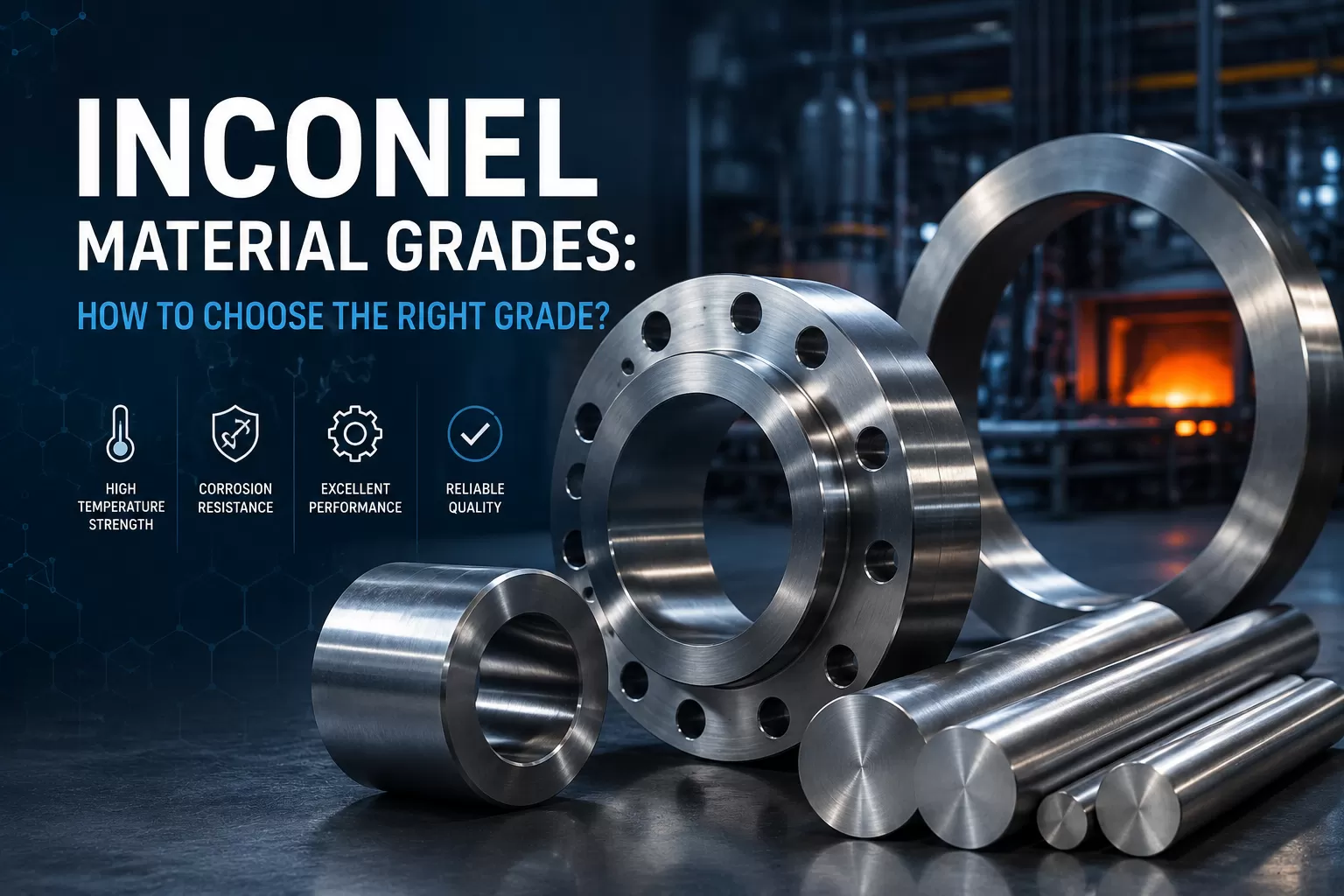
In the realm of high-temperature aerospace materials, Inconel 718 stands out as a precipitation-hardenable nickel-chromium superalloy that has dominated the industry since its development by INCO in the 1960s. Renowned for its exceptional creep resistance, high yield strength, fatigue durability, and corrosion resistance—especially in the critical 600–700°C temperature range, Inconel 718 is an indispensable material for gas turbine engines, rocket propulsion systems, and mission-critical aerospace components.
As aerospace engineers push for higher operating temperatures and longer service lives, understanding Inconel 718's creep-resistant behavior, microstructural foundations, and optimization strategies becomes increasingly vital.
What Makes Inconel 718 a Top Choice for High-Temperature Aerospace?
Inconel 718's superiority over other nickel-based alloys lies in its unique combination of properties tailored for extreme aerospace environments:
- Unmatched Creep Resistance: Maintains structural integrity at sustained temperatures up to 650°C (and beyond) with minimal time-dependent deformation, outperforming alternatives like Inconel 625 and Waspaloy in the 600–700°C regime.
- Balanced Mechanical Performance: Combines high yield strength, fatigue resistance, and ductility, making it suitable for components under cyclic thermal loads and mechanical stress.
- Superior Weldability & Cost-Effectiveness: Offers better fabricability and a more favorable cost-to-performance ratio compared to advanced γ′-based alloys (e.g., Rene 88, Udimet 720), enabling widespread use in mass-produced aerospace systems.
- Corrosion Resistance: Withstands harsh high-temperature gases and chemical environments, ensuring long-term reliability in turbine engines and rocket propulsion systems.
Microstructural Foundations: The Science Behind Inconel 718's Creep Resistance
The creep-resistant prowess of Inconel 718 stems from its carefully engineered microstructure and strengthening phases. Here's a detailed breakdown:
Nominal Chemical Composition (wt%)
| Element |
Nickel (Ni) |
Chromium (Cr) |
Iron (Fe) |
Niobium (Nb) |
Molybdenum (Mo) |
Titanium (Ti) |
Aluminum (Al) |
| Content |
~52.5% |
~19% |
~18.5% |
~5.1% |
~3.0% |
~1.0% |
~0.5% |
Key Strengthening Phases
Unlike other superalloys that rely primarily on γ′ (Ni₃(Al,Ti)), Inconel 718's primary creep-resistant phase is γ″ (Ni₃Nb)—a body-centered tetragonal (BCT) precipitate that acts as a powerful dislocation barrier. When combined with γ′, these phases work synergistically to suppress creep:
- γ′ (Ni₃(Al,Ti)): A coherent, ordered face-centered cubic (FCC) phase that enhances overall strength.
- γ″ (Ni₃Nb): Finely dispersed, disc-like precipitates (10–50 nm for optimal performance) that block dislocation climb and cross-slip—two primary mechanisms of creep deformation.
- Grain Boundary Carbides: MC (NbC) and M₂₃C₆ carbides form at grain boundaries, minimizing grain boundary sliding and cavitation, which are major causes of tertiary creep failure.
Creep Mechanisms in Inconel 718 at Elevated Temperatures
Creep is a time-dependent plastic deformation that becomes significant when temperatures exceed ~0.4 times the material's absolute melting point (for Inconel 718, this threshold is ~550°C). Inconel 718 undergoes three distinct creep stages:
- Primary Creep: Initial rapid deformation slows as internal stresses balance out.
- Secondary (Steady-State) Creep: The critical phase for engineering design, characterized by a constant, extremely low strain rate—made possible by γ″ precipitates, strong grain boundary cohesion, and carbide reinforcement.
- Tertiary Creep: Deformation accelerates due to precipitate coarsening, void formation, or grain boundary cavitation (onset delayed in Inconel 718 compared to competing alloys).
Creep Performance Benchmarks (Properly Aged Inconel 718)
| Temperature (°C) |
Applied Stress (MPa) |
Rupture Life (Hours) |
| 650 |
350 |
>10,000 |
| 700 |
250 |
~7,000 |
| 750 |
180 |
~2,000 |
Heat Treatment: Optimizing Inconel 718 for Maximum Creep Resistance
Heat treatment is critical to unlocking Inconel 718's full creep-resistant potential, as it controls the size, distribution, and volume fraction of γ′ and γ″ precipitates. The standard process involves solution annealing + double aging:
- Solution Annealing (980–1050°C): Dissolves unwanted phases (e.g., δ-phase) and homogenizes the FCC γ-matrix.
- First Aging (720°C for 8 Hours): Initiates the nucleation of γ′ and γ″ precipitates.
- Second Aging (620°C for 8 Hours): Stabilizes and refines precipitates to the ideal 10–50 nm size, maximizing dislocation pinning.
Proper heat treatment can extend Inconel 718's creep rupture life by 200–400%. Conversely, over-aging or improper annealing forms the δ-phase (Ni₃Nb), which depletes niobium from the matrix and reduces γ″ availability—severely compromising creep resistance.
Aerospace Applications of Inconel 718
Inconel 718's unique balance of creep strength, fabricability, and cost-effectiveness makes it a staple in aerospace propulsion systems. Key applications include:
- Turbine Disks: Resists creep-fatigue interaction under radial stress and thermal gradients (used in GE's LEAP engine and Rolls-Royce Trent series).
- Compressor Rotors & Seals: Maintains dimensional stability in the hot gas path of engines.
- Fuel Nozzles & Engine Casings: Withstands cyclic thermal loads and mechanical stress.
- Rocket Propulsion Components: Endures extreme temperatures and pressure in launch vehicles.
Additive Manufacturing (AM) of Inconel 718: Challenges & Solutions
Additive manufacturing (e.g., Selective Laser Melting/SLM, Electron Beam Melting/EBM) is transforming Inconel 718 component design, enabling lightweight lattice structures and integrated cooling channels. However, AM introduces unique challenges that impact creep performance:
- Residual Stress & Anisotropy: From rapid solidification, leading to inconsistent mechanical properties.
- Inhomogeneous Microstructures: Require customized post-processing.
- Porosity & Lack-of-Fusion Defects: Reduce creep life by creating stress concentration points.
Solutions for AM Inconel 718
- Hot Isostatic Pressing (HIP): Eliminates porosity and reduces residual stress.
- Tailored Aging Cycles: Optimizes precipitate morphology in as-built structures.
- Process Optimization: Controls laser/electron beam parameters to minimize defects.
Recent research shows that post-processed AM Inconel 718 can achieve creep life comparable to wrought material—opening new avenues for aerospace innovation.
Inconel 718 vs. Competing Alloys: When to Choose It
While Inconel 718 excels in the 600–700°C range, it has limitations:
- Temperature Cap: Loses effectiveness above 700°C due to γ″ phase instability. -
- High-Temperature Strength: Outperformed by γ′-based alloys (e.g., Rene 88, Udimet 720) and single-crystal superalloys (e.g., Inconel 939, Nimonic 263) above 750°C.
Alloy Comparison Summary
| Alloy |
Temperature Range (°C) |
Creep Strength |
Weldability |
Cost-Effectiveness |
| Inconel 718 |
600–700 |
Excellent |
Superior |
High |
| Inconel 625 |
500–650 |
Good |
Good |
Moderate |
| Waspaloy |
650–750 |
Very Good |
Moderate |
Low |
| Rene 88 |
700–850 |
Outstanding |
Poor |
Very Low |
For most aerospace applications operating between 600–700°C, Inconel 718 remains unbeatable for its combination of performance, weldability, and cost.
Future Research: Enhancing Inconel 718's Creep Resistance
Ongoing research aims to extend Inconel 718's operating temperature envelope by 20–50°C while preserving its key advantages.Key focus areas include:
- Alloying Additions: Small amounts of tungsten (W) or rhenium (Re) to boost high-temperature strength.
- Grain Boundary Engineering: Controlling grain orientation and boundary character to minimize sliding and cavitation.
- Nanostructured Variants: Using severe plastic deformation (SPD) or powder metallurgy to refine grain and precipitate size, enhancing creep resistance.
- Advanced Heat Treatment: Machine learning-driven processes to optimize precipitate evolution for specific temperature-stress regimes.
Conclusion
Inconel 718's enduring role in aerospace is a testament to its unparalleled balance of creep resistance, mechanical strength, weldability, and cost-effectiveness—especially in the 600–700°C range that defines modern gas turbine and rocket propulsion systems. Its microstructural design, centered on γ″ precipitates, and optimized heat treatment processes make it a reliable choice for mission-critical components.
As additive manufacturing matures and new alloying strategies emerge, Inconel 718 will continue to evolve, solidifying its position as a cornerstone of high-temperature aerospace materials. For engineers seeking a proven, cost-effective solution for creep-prone applications, Inconel 718 remains the gold standard.





 en
en
 ko
ko
 ru
ru
 es
es
 ar
ar
 hi
hi