 en
en
 ko
ko
 ru
ru
 es
es
 ar
ar
 hi
hi

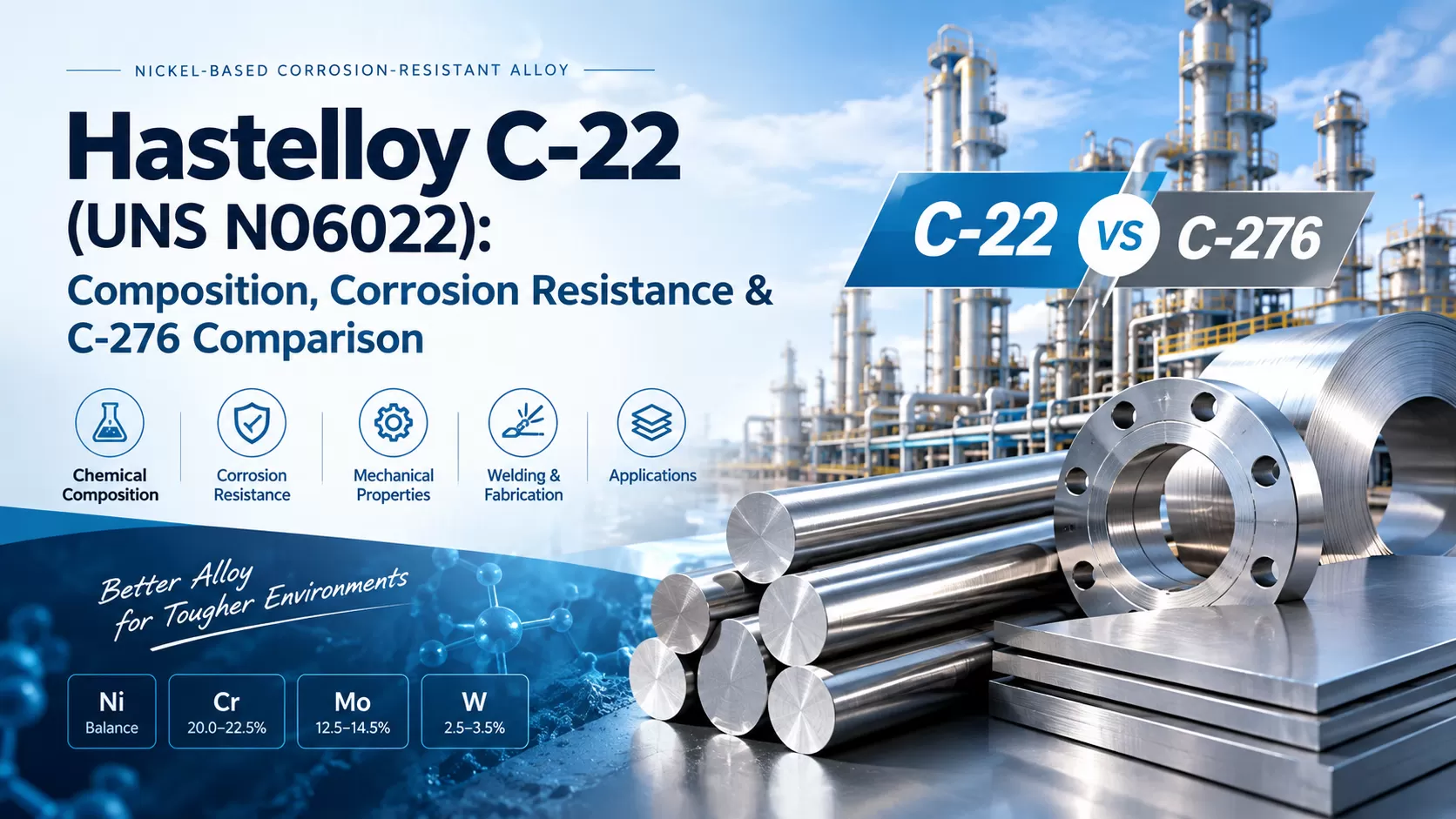
In harsh industrial corrosion scenarios, stainless steels like 316L and 904L often fail quickly in chlorinated mixed acid media. Hastelloy C‑276, with its unique Ni‑Cr‑Mo‑W alloy design, stands as the “ultimate armour” against extreme media such as chlorinated mixed acids and wet chlorine gas. As the earliest and most widely used alloy in the Hastelloy C series, C‑276 corresponds to UNS N10276, German grade 2.4819, and Chinese grade NS3304. For over five decades it has been extensively applied in chemical processing, flue gas desulphurisation, hydrometallurgy, and pharmaceuticals.
1. Nickel Matrix vs. Stainless Steel — Fundamental Differences
Many newcomers to the industry mistakenly treat C‑276 as “stainless steel”, but there are fundamental differences. Conventional austenitic stainless steels are iron‑based, whereas C‑276 is a nickel‑based alloy. The nickel matrix itself provides excellent resistance to chloride‑induced stress corrosion cracking — a property that stainless steels simply cannot match. Many austenitic stainless steels are prone to stress corrosion cracking in high‑temperature chloride‑containing environments, leading to sudden leakage failures, whereas C‑276 handles such risks with ease.
2. Alloying Element Functions
Every alloying element in C‑276 serves a critical, irreplaceable purpose:
- Chromium forms a passive oxide film on the surface, resisting oxidising media such as nitric acid and ferric ions.
- High molybdenum content is the key to resisting reducing acids, pitting, and crevice corrosion — especially in hydrochloric acid, phosphoric acid, and halide‑containing environments.
- Tungsten is a signature element of C‑276 (distinguishing it from C‑2000 and C‑22). Together with molybdenum, it further enhances localised corrosion resistance, particularly in wet chlorine gas and chlorinated reducing media.
- Ultra‑low carbon and low silicon design: carbon is strictly controlled below 0.01% to deliberately suppress the precipitation of grain‑boundary carbides and harmful intermetallic phases during welding.
3. Comprehensive Corrosion Performance
C‑276 is a broad‑spectrum nickel alloy that withstands both oxidising and reducing acid media, and adapts well to complex process streams with mixed impurities. In chloride‑ and bromide‑containing media, its pitting and crevice corrosion resistance far surpasses that of any austenitic stainless steel, offering stable service in seawater, salt solutions, and chlorinated process liquids. Under wet chlorine gas, hydrogen chloride gas, and impure hydrochloric acid conditions, C‑276 has a vast body of proven industrial practice — an advantage that few other nickel alloys can match.
⚠️ Application boundaries and limitations
- Temperature danger zone: Prolonged exposure in the 600‑900°C range can precipitate brittle intermetallic phases such as σ and μ, causing loss of toughness and corrosion resistance. Long‑term service in this range should be avoided.
- Sulphuric acid service: In pure, high‑concentration sulphuric acid, C‑276 is outperformed by C‑2000 (which contains copper).
- Alloy selection principle: Never choose solely based on brand reputation; always consider temperature, concentration, and impurity ions comprehensively to avoid either over‑specification or premature failure.
4. Hot and Cold Working, and Welding Characteristics
C‑276 in the solution‑annealed state has a single‑phase austenitic structure with good ductility and toughness. Sheets, strips, seamless tubes, welded tubes, bars, forgings, and welding wire are all readily available on the market.
🔥 Hot working
- Temperature range: 950‑1150°C
- After hot working, rapid water quenching is required
- Where possible, follow with solution annealing to fully restore corrosion resistance
❄️ Cold working
- Pronounced work hardening
- Large deformations require intermediate annealing to relieve stress
- Strict isolation from carbon steel iron contamination is essential
🔧 Key welding control points
- Welding method: Prefer TIG (GTAW) with matching filler metal ERNiCrMo‑4 — do not mix with other nickel‑based fillers.
- Heat input control: Keep interpass temperature below 150°C to minimise the heat‑affected zone.
- Back shielding: The weld root must be properly shielded with argon to prevent oxidation and alloy depletion.
- As‑welded use: In most corrosive environments, the weldment can be used directly without post‑weld heat treatment.
- Special cases: Only after severe plastic deformation or in extremely aggressive environments is a 1100‑1150°C solution anneal plus rapid water quench required.
- Dedicated tools: Grinding and welding tools must be reserved exclusively for C‑276; never use wheels or brushes that have been used on carbon steel.
5. C‑276 vs. C‑2000 — How to choose?
| Aspect | C‑276 | C‑2000 |
|---|---|---|
| Key elements | Mo + W synergy | W replaced by Cu |
| Advantageous media | Chlorinated reducing media, wet chlorine | Moderate concentration sulphuric acid |
| Market availability | Mature, abundant stock | More niche |
| Selection tip | When medium is hydrochloric acid, chlorine, or chloride salts | When sulphuric acid dominates and oxidising/reducing conditions alternate |
Both alloys are expensive; selection should be based on laboratory corrosion test data, balancing equipment life against project investment — avoid blindly opting for a higher grade.
6. Industry Status and Outlook
With continuous advances in domestic special metallurgy, the quality of Chinese‑produced C‑276 plate, tube, and forgings has improved significantly, replacing many imports and supporting the localisation of chemical and environmental equipment. However, nickel‑based alloys demand stringent control over melting, forging, heat treatment, and welding — always verify material certificates and conduct incoming inspections.
Hastelloy C‑276, with its balanced and versatile corrosion resistance, proven workability and weldability, and decades of industrial experience, remains a classic grade in the nickel‑based corrosion‑resistant alloy family. Even as new improved alloys appear, C‑276 continues to hold a key position on the material selection list for aggressive service environments.